
What Does Full Service Home Remodeling Include In Denver
Local owners ask what full service home remodeling includes in Denver given local codes and climate. Riley Riley Construction details services tailored for Denver properties and permit requirements. Call 17207828897 to discuss local considerations and schedule a site visit. This content will help Denver homeowners plan with local expertise.
Homeowners often ask, "what does full service home remodeling include in Denver?" A full-service remodel delivered with local expertise means combining design, engineering, permitting, construction, and final inspection management in a single coordinated package. At Riley Riley Construction, we guide Denver property owners through each phase so the project meets their goals, complies with local rules, and stands up to Denver's unique climate and elevation.
Full-service remodels reduce risk and streamline communication: one point of responsibility coordinates subcontractors, verifies permits, schedules inspections, and adapts construction methods to local building policies. Whether you are renovating a kitchen, adding a second story, or reworking your basement for energy efficiency, understanding the local landscape early helps minimize delays and unexpected costs.
What a full-service home remodel includes for Denver properties
By definition, a full-service remodel covers the entire project lifecycle from initial concept to final walk-through. Typical scope includes site evaluation, schematic and detailed design, structural engineering when required, full trade coordination-framing, electrical, plumbing, HVAC, insulation-and interior finishes like cabinets, flooring, and paint. The difference for Denver projects is that each of these tasks also includes local code checks and practical adaptations to elevation and climate.
In practice, Riley Riley Construction handles: project management, permit procurement, on-site supervision, and quality control. We coordinate inspections with city departments, manage utility connections and upgrades, and provide warranty and follow-up. Homeowners benefit from consistent documentation, cost tracking, and scheduled milestones so they always know the project status and upcoming decisions.
Common elements bundled into full-service remodeling include:
- Design development and material selection assistance
- Engineering for structural modifications, foundation repairs, and load-bearing changes
- Full trade coordination: framing, roofing, siding, windows, electrical, plumbing, and HVAC
- Energy-efficiency upgrades: insulation, windows, sealing, ventilation, and sometimes solar-ready wiring
- Permit application and inspection management with the City and County of Denver
- Final cleaning, punch-list completion, and post-occupancy warranty support
Denver codes, permitting, and design review: what to expect
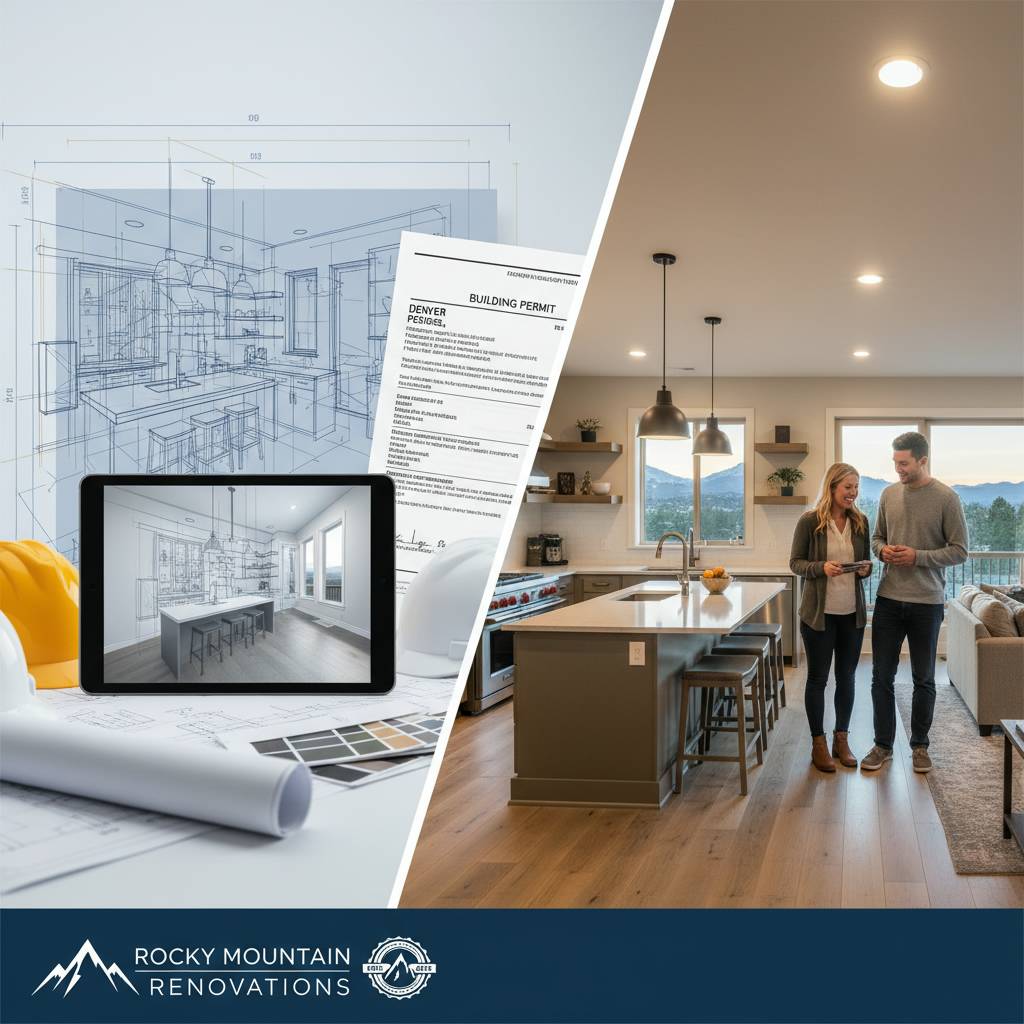 Denver operates with a set of local building codes, adopted amendments, and zoning rules that affect remodeling projects. A full-service remodel requires an early compliance review to determine which permits are necessary: building permits, mechanical, electrical, plumbing, and sometimes specialized permits for decks, retaining walls, or gas lines. Failure to pull required permits can lead to costly stop-work orders or problems selling the house later.
Riley Riley Construction factors permit strategy into the design phase. That means preparing permit-ready drawings, submitting to the appropriate Denver permitting office, responding to plan review comments, and scheduling inspections on behalf of the homeowner. Our familiarity with local reviewers and typical review comments helps reduce back-and-forth and accelerates approval timelines.
Historic properties and neighborhood design overlays
Many Denver neighborhoods have historic or design overlay requirements that add another layer of review. If your home falls in one of these districts, you may need design review approval in addition to building permits. Typical issues include exterior materials, rooflines, porch dimensions, and window styles. These reviews can add time but preserve neighborhood context and often increase long-term property value.
Common code triggers and how we manage them
Simple changes can trigger structural or energy-code upgrades: opening a load-bearing wall, enlarging window openings, or finishing a basement. A full-service remodel anticipates those triggers by involving engineers early, specifying insulation and ventilation to meet the energy code, and documenting upgrades for final inspections. We also prepare homeowner-facing documentation that explains why particular code-driven changes are necessary and how they benefit durability and comfort.
Climate and site-specific considerations unique to Denver
Denver's semi-arid climate, wide temperature swings, high UV exposure, and winter freeze-thaw cycles require specific material choices and construction detailing. Roof systems must be selected and flashed to handle snow and UV exposure; siding needs durable finishes, and window selection should account for both solar heat gain and insulation. Elevation also affects HVAC sizing and combustion appliance venting, so equipment must be specified for performance at higher altitudes.
Water management is another critical concern. Flashing, proper grading, reliable gutters, and robust downspout routing preserve foundation health against occasional heavy rains and spring snowmelt. For full-service projects, we design drainage solutions and verify that window and door details incorporate proper water diversion to avoid long-term moisture issues.
Energy performance and occupant comfort are essential. Insulation levels, air sealing, and ventilation strategies are chosen not only to meet code but to reduce heating loads during Denver's cold months and maintain comfortable interior humidity during dry summers. We frequently recommend energy audits, duct testing, and targeted upgrades-such as high-efficiency boilers, heat pumps sized for altitude, or zoned systems-to maximize value and long-term savings.
Typical process, timeline, and what homeowners should plan for
A well-executed full-service remodel follows a predictable sequence: initial consultation and site evaluation, design and budget development, permitting, demolition and rough-in phases, inspections, finishes and trim, and final completion. While every project is different, a typical mid-sized interior remodel in Denver often spans 8-16 weeks from permit issuance to final walk-through. Larger or structural projects can extend to several months, particularly when design review or complex engineering is required.
Communication is a hallmark of full-service management. Homeowners receive a project schedule with milestones, expected inspection dates, and contingency windows for weather or plan review delays. We recommend planning for a realistic buffer-often 10-20% of the projected schedule-and maintaining contingency funds in the budget to handle unforeseen conditions discovered during demolition.
Key steps homeowners can expect during a remodel:
- Initial site visit and needs assessment, including budget targets
- Design development and selection of finishes, fixtures, and appliances
- Permit document preparation and submission
- Demolition, structural work, and mechanical rough-ins
- Insulation, drywall, and finish carpentry
- Final inspections, commissioning of systems, and client walk-through
Budgeting, typical cost ranges, and where Denver-specific items affect price
 Costs vary by scope, finishes, and complexity. Full-service remodels include labor coordination and permit fees that can be higher in urban markets like Denver. Below is a simple comparison of common project types and typical cost ranges to help you plan. These figures are general estimates; site conditions, product choices, and design complexity will change final pricing.
| Project Type | Typical Cost Range (approximate) |
|---|---|
| Kitchen Remodel (mid-range) | $30,000-$90,000 |
| Bathroom Remodel (full) | $12,000-$45,000 |
| Basement Finish | $25,000-$80,000 |
| Second-Story Addition | $120,000-$350,000 |
| Exterior Siding & Windows | $8,000-$60,000 |
| Deck or Porch (new) | $5,000-$30,000 |
Specific Denver cost drivers include permit and impact fees, potential historic or design review costs, foundation repairs due to freeze-thaw cycles, and HVAC or appliance changes required for altitude. In many cases, investing in higher-quality windows, upgraded insulation, and appropriately sized mechanical systems pays dividends in comfort and lower operating costs.
FAQs, case examples, and common homeowner questions
Q: How long does it take to get permits in Denver? A: Permit timelines vary by scope and season. Simple permits may be issued quickly, while plan-reviewed permits with structural changes or design review can take several weeks. A full-service remodel includes permit coordination so your project moves through reviews as efficiently as possible.
Q: Will I need an engineer? A: If your remodel involves removing load-bearing walls, enlarging openings, or adding a story, structural engineering is required. We retain licensed engineers to prepare calculations and drawings and incorporate their recommendations into permit submissions and construction plans.
Case example: A mid-century bungalow in southeast Denver required a kitchen remodel, structural reinforcement for an enlarged header, and new insulated windows. We prepared permit drawings, obtained approvals, coordinated a mid-project electrical upgrade, and managed a three-month schedule that included two inspections. The homeowner gained improved energy performance and a modern kitchen layout while maintaining the home's original character.
Final considerations and how Riley Riley Construction partners with Denver homeowners
A true full-service remodel balances design goals, regulatory compliance, and performance in Denver's specific environment. Riley Riley Construction helps homeowners prioritize improvements that deliver the most long-term value: structural integrity, energy efficiency, and durable exterior systems. Our process emphasizes transparent cost estimates, clear schedules, and documentation needed for resale and insurance purposes.
For homeowners who want a single company to manage the entire project-design, permits, construction, and final inspections-full-service remodeling reduces friction and centralizes accountability. Our team, led by when appropriate, brings local knowledge about neighborhood requirements, common inspection items, and construction methods that work best at Denver elevations.
Next steps: schedule a site visit
If you are asking "what does full service home remodeling include in Denver" and want a practical, locally informed plan, the next step is a site visit and preliminary budget. We provide on-site evaluations that identify likely permit triggers, code considerations, and climate-related upgrades to prioritize. That analysis forms the basis for an accurate estimate and timeline.
To discuss your project and schedule a site visit, contact Riley Riley Construction at 17207828897. We will review your goals, outline the permitting path, and provide a clear proposal with phased options so you can choose the level of service that best fits your needs and budget.
Reach out today for a professional consultation and local expertise you can rely on. We look forward to helping Denver homeowners plan and execute remodels that last.