
Cost Vs Timeline Tradeoffs In Remodeling
Owners face cost vs timeline tradeoffs in remodeling and need guidance on balancing priorities. Riley Riley Construction explains how decisions impact budget and schedule and offers optimization tips. Call 17207828897 to explore scenarios that meet your goals and constraints. This page will help clients make tradeoffs with confidence.
Understanding the cost vs timeline tradeoffs in remodeling
Every remodeling project is essentially a balancing act between money and time. Owners often ask whether spending more will shorten the schedule, or if extending the timeline will reduce cost. The answer depends on the scope of work, the availability of materials and labor, and how decisions are sequenced. Recognizing that cost and schedule influence one another is the first step toward making informed choices that reflect your priorities.
When you consider cost vs timeline tradeoffs in remodeling, think about the measurable and intangible consequences of each choice. A faster schedule may require higher labor rates for expedited crews, premium shipping on materials, or multiple subcontractors working in parallel-each of which tends to increase direct cost. Conversely, a slower schedule can reduce peak expenditures and allow phased payments, but might extend temporary living costs, delay rent income, or create longer exposure to market inflation.
Key factors that drive cost and schedule
 Several variables repeatedly determine whether a project leans toward a higher cost/shorter schedule or a lower cost/longer schedule. These include scope complexity, material lead times, labor availability, permitting and inspections, site conditions, and client decision speed. Understanding how each factor operates on your specific job will help you predict where tradeoffs will be most impactful and where you can realistically save time or money.
For example, custom cabinetry or specialty finishes often have long lead times that can stretch a schedule regardless of how much you pay for labor. Conversely, simpler finishes with readily available materials can be accelerated through additional manpower or night/weekend shifts. Similarly, permitting delays are typically outside the control of contractors, so owners who want a faster schedule may need to pay for permit expediting services or plan around bureaucratic timelines early in the process.
Material and procurement realities
Material procurement is a frequent source of schedule friction. Lead times for appliances, countertops, windows, or doors may range from a few days to many weeks. Owners choosing exotic materials or custom pieces should anticipate longer timelines and higher costs. To manage this, you can prioritize long-lead items early, choose locally stocked alternatives, or pay for expedited production and shipping when schedule matters most.
Labor and crew strategy
Labor availability affects both cost and schedule significantly. A project completed by a single small crew might be more economical but will take longer. Hiring multiple crews or subcontractors to work in parallel can dramatically shorten time on site, but it increases management complexity and hourly or premium rates. Decide early whether your primary goal is speed or cost-efficiency, and align your contractor selection with that priority.
Common tradeoff scenarios and realistic outcomes
Owners frequently face a few recurring scenarios that illustrate the cost vs timeline tradeoffs in remodeling. Scenario A: You need the space back quickly-accelerating the schedule may require premium labor and expedited materials, which can increase costs by 10%-40% or more depending on complexity. Scenario B: Your budget is fixed and you can live with disruption-extending timelines or phasing the work can lower monthly cash flow needs but lengthen overall inconvenience.
Here are some practical, real-world examples to help visualize typical outcomes. A kitchen remodel that would normally take eight weeks can be compressed to four weeks with weekend shifts and two crews working in parallel. Expect a cost premium for overtime and coordination, and plan for potential quality tradeoffs if accelerated sequencing creates less time for finishing and inspection. Conversely, stretching that same project over 12-16 weeks reduces labor intensity and often lowers contractor markup, but increases living disruption duration.
| Approach | Typical cost impact | Typical schedule impact |
|---|---|---|
| Expedite with premium crews | Higher by 10%-40% depending on overtime | Shortens by 25%-50% |
| Phased/slow remodel | Lower per-phase cost, potential total inflation over time | Extends by 25%-100% |
| Standard schedule with misc. contingencies | Baseline cost with 10%-20% contingency | Predictable, moderate timeline |
Strategies to balance priorities and optimize outcomes
To balance cost vs timeline tradeoffs in remodeling, adopt a strategy that blends early planning, clear priorities, and contingency buffers. Start with a concise list of must-haves, nice-to-haves, and absolute constraints. This will allow you and your contractor to evaluate where time can be purchased with money and where time is non-negotiable. Clear priorities reduce indecision during construction, which is one of the biggest drivers of both delay and cost overrun.
Use the following practical tactics to keep both budget and schedule under control. First, lock in long-lead items early so procurement won't stall the crew. Second, set decision deadlines and financial milestones in your contract to avoid mid-project scope creep. Third, choose finishes that provide the desired aesthetic without forcing long wait times or inflated prices. Finally, maintain a contingency reserve-both financial and calendar-based-to absorb shocks without compromising the project.
- Prioritize long-lead item selection during design phase
- Use a phased approach when budget constraints exist
- Pay selectively for expediting when schedule is critical
- Commit to decisive selections to avoid change-order delays
- Include a 10%-20% contingency for cost and 10%-15% buffer for schedule
Working effectively with contractors and stakeholders
 Contractor selection and relationship management directly affect how well you can navigate cost vs timeline tradeoffs in remodeling. Choose contractors with proven experience delivering projects with the scheduling profile you need. If speed is your priority, ask for references of fast-track projects and for a realistic plan for overlapping trades. If cost is the priority, seek firms that have a track record of delivering value through efficient sequencing and strong subcontractor relationships.
Clear communication is essential. Establish a single point of contact for decision-making and require weekly progress updates. Use a written change-order process to handle scope shifts so costs and timeline impacts are documented and agreed upon. If you work frequently with your contractor, can be a useful shorthand in documents and informal conversations, but make sure all contractual items use full legal names and detailed descriptions to avoid ambiguity.
Contracts and payment structures
Your contract can be structured to align incentives with project goals. Time-and-materials contracts allow flexibility but can expose owners to rising costs if the timeline extends. Fixed-price contracts provide budget certainty but may include higher initial pricing to hedge contractor risk. Hybrid approaches-such as a guaranteed maximum price with shared savings-can balance cost control and flexibility. Whichever structure you choose, include specific milestones, holdbacks, and remedies for missed deadlines to make tradeoffs explicit.
Budgeting, contingencies, and realistic allowances
Accurate allowances are critical for owners weighing cost vs timeline tradeoffs in remodeling. Rather than guessing prices, use firm quotes for major items: appliances, mechanical systems, cabinets, and countertops. For elements that are uncertain, establish reasonable allowance ranges based on market data-$75-$200 per linear foot for certain trim work, $15-$40 per square foot for basic tile, or $200-$600 for midrange appliances-so you can see how choices ripple through both budget and schedule.
Maintain a structured contingency plan. Financial contingencies of 10%-20% are typical for residential renovations, while schedule contingencies of 10%-15% allow breathing room for inspections and unforeseen site conditions. Plan for the probability of change orders and include a protocol for quick decisions to minimize the domino effect of small delays. This blend of financial and calendar buffers reduces stress and keeps tradeoffs manageable.
Decision-making framework for choosing time or money
Adopt a simple decision framework to evaluate whether to pay for speed or extend the timeline. First, quantify the cost of delay-lost rental income, extended temporary housing, postponed business operations, or personal inconvenience. Second, price the options for acceleration: overtime wages, expedited shipping, and additional coordination costs. Compare the cost of acceleration to the quantified cost of delay and decide based on net benefit and tolerance for risk.
Use a prioritized checklist to guide decisions during construction. Identify items that must be on the critical path, items that can be staged, and items that can be value-engineered without sacrificing core objectives. This approach helps you make tradeoffs rationally rather than reactively. It also creates a transparent record that contractors can follow, minimizing disagreements and helping the project stay aligned with your goals.
- Quantify the cost of delay in real dollars and time
- Get firm quotes for acceleration options before committing
- Set decision deadlines to avoid cascading delays
- Use allowances and contingencies to absorb surprises
- Regularly reassess priorities as the project evolves
Case studies: how tradeoffs played out
Consider a homeowner who needed a finished guest suite before a family wedding. They prioritized time over cost and paid for expedited cabinetry, an extra electrician crew, and weekend labor. The suite was finished two weeks earlier, but the owner paid about 30% more than a standard schedule would have required. The tradeoff was successful because the avoided expense and emotional value of hosting family outweighed the premium.
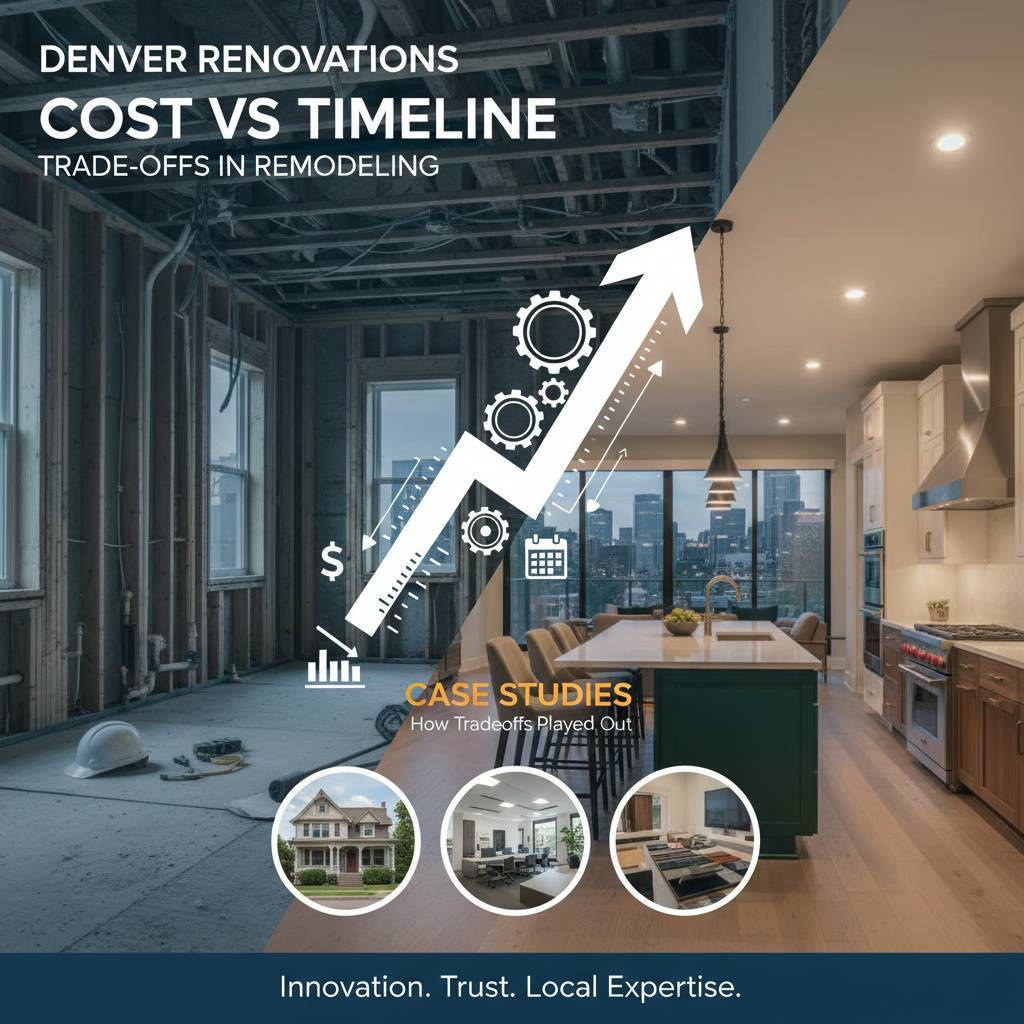
In another case, a small rental owner chose to phase a full bathroom remodel over three months to avoid taking the unit off the rental market for a continuous block. The total project cost was controlled by avoiding overtime and premium shipments, but the owner accepted extended vacancy nights and tenant swapping during parts of the remodel. The slower approach preserved budget while meeting business constraints, illustrating how phasing can be an effective compromise.
Practical checklist before you start
Before pulling permits or signing a contract, work through this checklist to prepare for the cost vs timeline tradeoffs in remodeling. Confirm your non-negotiables, establish realistic budget and schedule expectations, collect multiple bids, and ask subcontractors about lead times. Having this inventory of decisions ready reduces the need for costly on-the-fly choices once demolition begins.
- Define non-negotiable completion date or budget cap
- Inventory long-lead items and lock selections early
- Obtain at least three detailed bids with scope clarity
- Include contingency amounts and schedule buffers in the plan
- Establish communication protocols and decision deadlines
Final considerations and next steps
Balancing cost vs timeline tradeoffs in remodeling is less about finding a perfect formula and more about creating a repeatable decision process that reflects your priorities. Thoughtful planning, clear communication, and realistic contingencies go a long way toward preventing costly surprises. Remember that pace and price are linked, but the right combination varies by project and by owner objectives.
If you want help exploring specific scenarios and seeing how different choices would affect your project, Riley Riley Construction can model options and present clear recommendations tailored to your situation. We can outline fast-track and value-driven variants, quantify the cost of acceleration, and prepare a project plan that aligns with your goals.
Ready to discuss tradeoffs that meet your goals and constraints? Call 17207828897 to schedule a consultation with Riley Riley Construction. Our team will walk you through realistic timelines, budget sensitivities, and optimization strategies so you can make confident decisions.
We look forward to helping you balance cost and schedule with clarity and confidence. Contact Riley Riley Construction at 17207828897 to get started.