
Common Mistakes In Full Service Remodeling Projects
A practical guide to avoiding common mistakes in full service remodeling projects
Undertaking a full service remodeling project can be exciting and stressful in equal measure. Homeowners frequently underestimate the number of decisions, the coordination required, and the ripple effects of one delay or miscommunication. Riley Riley Construction helps clients identify and avoid the most common mistakes in full service remodeling projects so they can protect their timeline, budget, and peace of mind. This guide walks through typical missteps and offers practical, proven ways to prevent them.
Whether you are updating a kitchen, reconfiguring a bathroom, or completing a whole-home renovation, understanding where projects commonly go off track will empower you to make better choices during planning and execution. Read on to learn simple strategies that reduce risk and improve outcomes. If you prefer, call 17207828897 to schedule a preconstruction review that flags issues early and gives you confidence before demolition begins.
Planning pitfalls that derail remodeling projects
One of the biggest sources of frustration is starting a project without a clear, agreed-upon scope. Vague goals or last-minute add-on ideas create scope creep, increase costs, and lengthen the schedule. In full service remodeling, scope clarity is essential because multiple trades and permit cycles depend on stable plans. A thoughtful planning phase includes documented scopes, drawings, and milestones so everyone - homeowner, design team, and contractor - knows exactly what's included.
Another planning mistake is overlooking permits, HOA rules, or local codes until work is underway. Permit delays can pause construction for weeks, and noncompliance can require costly rework. During preconstruction, confirm permit requirements, submit drawings early, and track review timelines. This proactive approach helps prevent sudden stoppages and the frustration of seeing finished work taken down to meet code.
Scope creep: why it matters and how to control it
Scope creep happens when you add features or change directions after work starts, often because a new idea looks great or a product inspires new choices. The truth is, changes after demolition are exponentially more expensive than decisions made during planning. Set a change-order process before work begins: require written approvals for any alteration, include cost and time impacts, and reserve a contingency fund so unexpected desires don't derail the project.
Budget and contract errors that cost time and money
 Underestimating costs is a frequent mistake that turns a manageable project into a stressful scramble. Many homeowners base expectations on headline numbers they find online without accounting for regional labor rates, material choices, structural changes, or concealed issues. To avoid surprises, request line-item estimates that separate labor, materials, permits, and contingencies so you see what drives cost and where you have room to adjust.
Contracts that are vague or missing critical details invite disputes down the road. A robust contract outlines the scope, payment schedule, warranty terms, change-order process, and dispute resolution steps. If you don't understand a clause, ask for clarification or get an independent review. A clear contract protects everyone and reduces the temptation to interpret vague language later.
Contingency planning and realistic allowances
Every full service remodeling project should include a contingency for unforeseen problems like hidden rot, outdated wiring, or subfloor issues. Typical contingency amounts vary, but 10%-20% of the construction budget is common depending on the age and condition of the home. Setting this aside in advance prevents mid-project stalling when surprises appear. Pair contingencies with allowances for fixtures and finishes so selections can be finalized without jeopardizing the schedule.
Communication and scheduling mistakes that create frustration
Poor communication between the homeowner, project manager, and subcontractors is a top cause of delays. When expectations are not documented, assumptions multiply and small misunderstandings grow into larger problems. Establish regular check-ins and a single point of contact who consolidates updates, issues change requests, and manages vendor coordination. This keeps information transparent and reduces the back-and-forth that stalls work.
Another frequent misstep is underestimating the time required for lead items like cabinetry, custom windows, or specialty tile. Long lead times can block critical-path activities and force inconvenient staging decisions. During planning, compile a lead-time schedule and order key items early. If necessary, consider interim work that can proceed while long-lead items are in transit so crews don't sit idle.
Decision timelines: how slow choices add up
Homeowners often assume they can make finish selections during construction without impacting the timeline. In reality, delayed approvals for colors, fixtures, or hardware cascade through scheduling, causing installers to wait or rush through related tasks. Create a decision calendar with deadlines for selections and approvals. Treat those deadlines as firm to avoid last-minute rush fees or compromises in workmanship.
On-site execution mistakes and quality control
Execution errors show up as inconsistent finishes, misinstalled fixtures, or hidden shortcuts that surface later. Skilled oversight during the build phase is essential. Regular site inspections by the project manager and documented sign-offs after each major milestone-framing, rough-in, insulation, and final finishes-reduce the chance that small defects carry through to the end of the project.
Subcontractor coordination is also critical. In full service remodeling, tasks are interdependent: plumbers, electricians, carpenters, and finishers often need to work in a tight sequence. Poor sequencing leads to rework or prolonged downtime. Build a realistic, crew-aware schedule, and respect trade sequencing so each discipline can complete high-quality work without constant interruption.
Material selection and delivery mistakes
Choosing materials that don't match field conditions is common-porcelain tile that doesn't work with radiant floors, or cabinets that don't fit a revised doorway. Have your contractor or design team verify measurements and compatibility before finalizing orders. Use mock-ups when possible for complex details and verify delivery staging so materials are protected on-site and available when crews are ready to install.
How a preconstruction review prevents the most costly mistakes
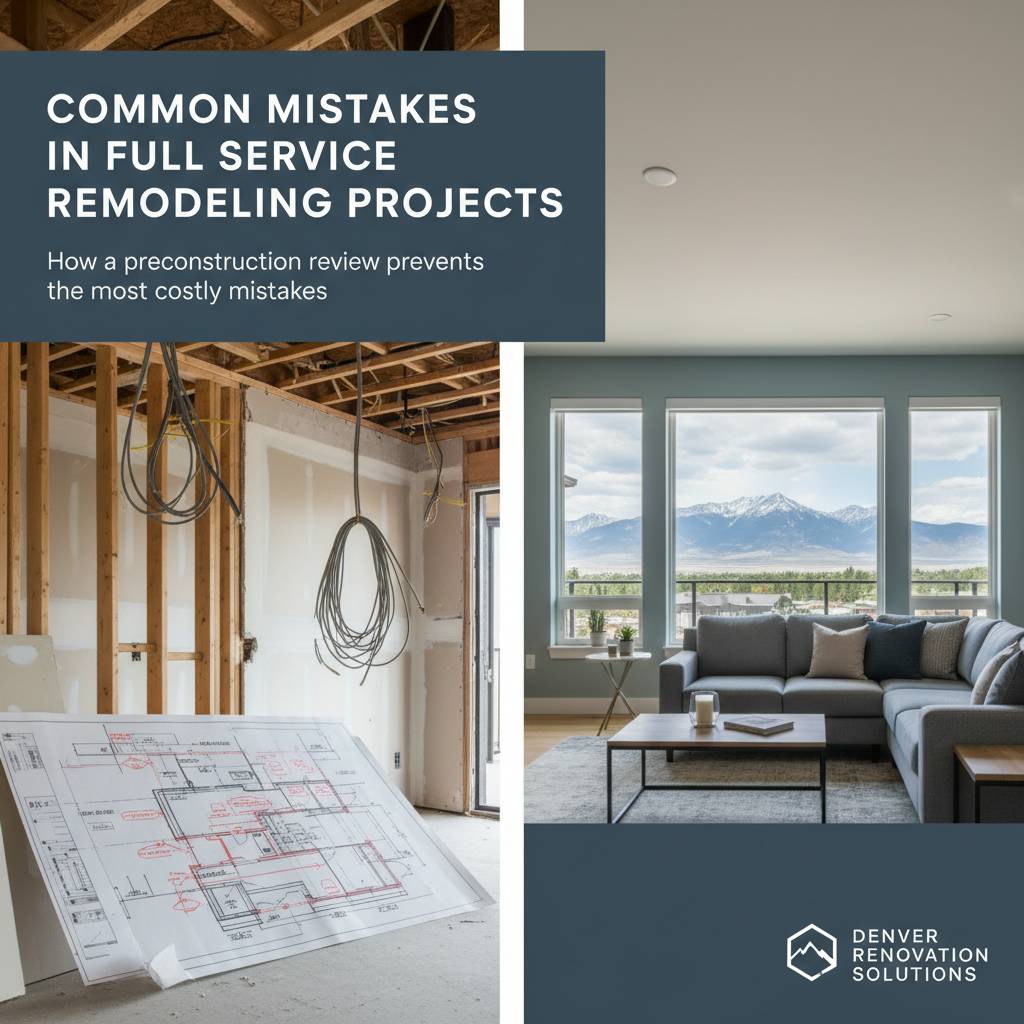 A thoughtful preconstruction review surfaces issues early so you can make informed decisions without pressure. Riley Riley Construction offers preconstruction services that examine structural conditions, schedule impacts, permit risks, and realistic cost estimates. The goal is to provide a practical roadmap that reduces surprises and creates a budget and timeline you can trust. A short up-front investment in planning returns many times over in reduced stress and change orders.
Below is a simple comparison that illustrates common outcomes when a preconstruction review is completed versus when it is skipped:
| Aspect | With Preconstruction Review | Without Preconstruction Review |
|---|---|---|
| Scope clarity | Defined and documented | Vague and changing |
| Budget accuracy | Line-item estimate with contingency | High risk of overruns |
| Schedule predictability | Lead-time and sequencing planned | Frequent delays and rework |
Investing time in a preconstruction review reduces the probability of costly mid-project decisions and helps you set realistic expectations. When homeowners take this step, the team can anticipate issues such as structural reinforcement, utility relocations, or historic home restrictions and budget and schedule for them up front.
Practical checklist: steps you can take today
To protect your investment and timeline, start with a concise checklist you can use before signing a single contract. First, get a written scope and a line-item estimate. Second, confirm permit requirements and review HOA or local restrictions. Third, establish a communication plan with a primary point of contact. These three steps eliminate many of the common mistakes in full service remodeling projects and set a project up for smoother execution.
- Ask for a detailed contract with change-order procedures and warranty terms.
- Set aside a 10%-20% contingency for hidden conditions and finish upgrades.
- Agree on a decision calendar with deadlines for finishes and approvals.
- Request a lead-time schedule for long-lead items and order them early.
- Schedule regular site walkthroughs and milestone sign-offs.
Following this checklist reduces friction and empowers you to oversee the project with confidence. If you want a template or a walkthrough of these items, Riley Riley Construction can provide a tailored preconstruction check that aligns with your project goals and the specific conditions of your home.
Real-world examples and how problems were solved
One recent full kitchen remodel involved an older home with unexpected joist rot discovered after demolition. Because the homeowner had approved a contingency and the team completed a rapid preconstruction reassessment, the structural repair was completed without delaying tile installation or appliance delivery. This illustrates how planning and contingency funds protect both schedule and quality.
In another case, a client delayed final tile selection until late in the project, causing a two-week pause while custom tile was sourced. The pause was avoided in later projects after the team introduced a decision calendar and a mock-up process. These examples show that many issues are easily prevented by planning and firm decision dates rather than by costly reactive fixes.
Next steps and how Riley Riley Construction can help
If you are planning a full service remodeling project, the smartest first move is to request a preconstruction review. That review clarifies scope, identifies risks, and produces a realistic budget and schedule. Call 17207828897 to arrange a consultation where we can walk through your goals, review existing plans, and explain how a short up-front assessment reduces the likelihood of the common mistakes in full service remodeling projects.

For homeowners who want extra confidence, ask for references and examples of completed projects with similar scopes. Request a sample contract and a list of warranties. Good communication, transparent pricing, and documented processes are the marks of a team that will respect your home and your timeline. As sometimes says, the right planning is the difference between an enjoyable transformation and an avoidable headache.
Ready to protect your remodel? Contact Riley Riley Construction today to schedule a preconstruction review and take the first step toward a smoother, more predictable project. Call 17207828897 to get started - we'll help you avoid common mistakes and keep your remodel on track.