
Questions For Full Service Remodeling Quotes
Knowing the right questions: why it matters when comparing full service remodeling quotes
When you start collecting bids, the difference between a confusing quote and one that gives you confidence often comes down to the questions you ask. Asking the right questions for full service remodeling quotes helps you compare offers effectively by revealing scope, assumptions, and exclusions. That clarity prevents surprises, protects your budget, and ensures each contractor bids on the same set of expectations so you can evaluate proposals apples-to-apples.
Riley Riley Construction understands how intimidating line items and allowances can be. We encourage homeowners to approach every quote as a conversation, not a final decree. Getting answers to the right questions exposes variations in materials, timelines, and subcontractor allowances that otherwise hide behind formatted numbers. In short, good questions turn numbers into meaningful decisions and keep your project moving smoothly from concept to completion.
What completeness and transparency look like in a quote
A complete quote does more than present a lump-sum number. It breaks the project into understandable chunks-demolition, structural work, rough-in, finishes, fixtures, and clean-up-so you can see where money is allocated. Transparency also means noting assumptions: if a quote excludes permit fees, replacement of degraded framing, or specific appliance brands, those items should be called out so you know what additional costs might arise. This is central to comparing offers effectively.
When assessing transparency, look for a clear explanation of the contractor's responsibilities versus homeowner responsibilities. A trustworthy full service remodeler will list allowances for finishes and fixtures with realistic ranges and explain how change orders will be handled. That clarity reduces friction during the job and gives you documented expectations for timeline, payment milestones, and quality standards.
Core categories of questions to ask every contractor
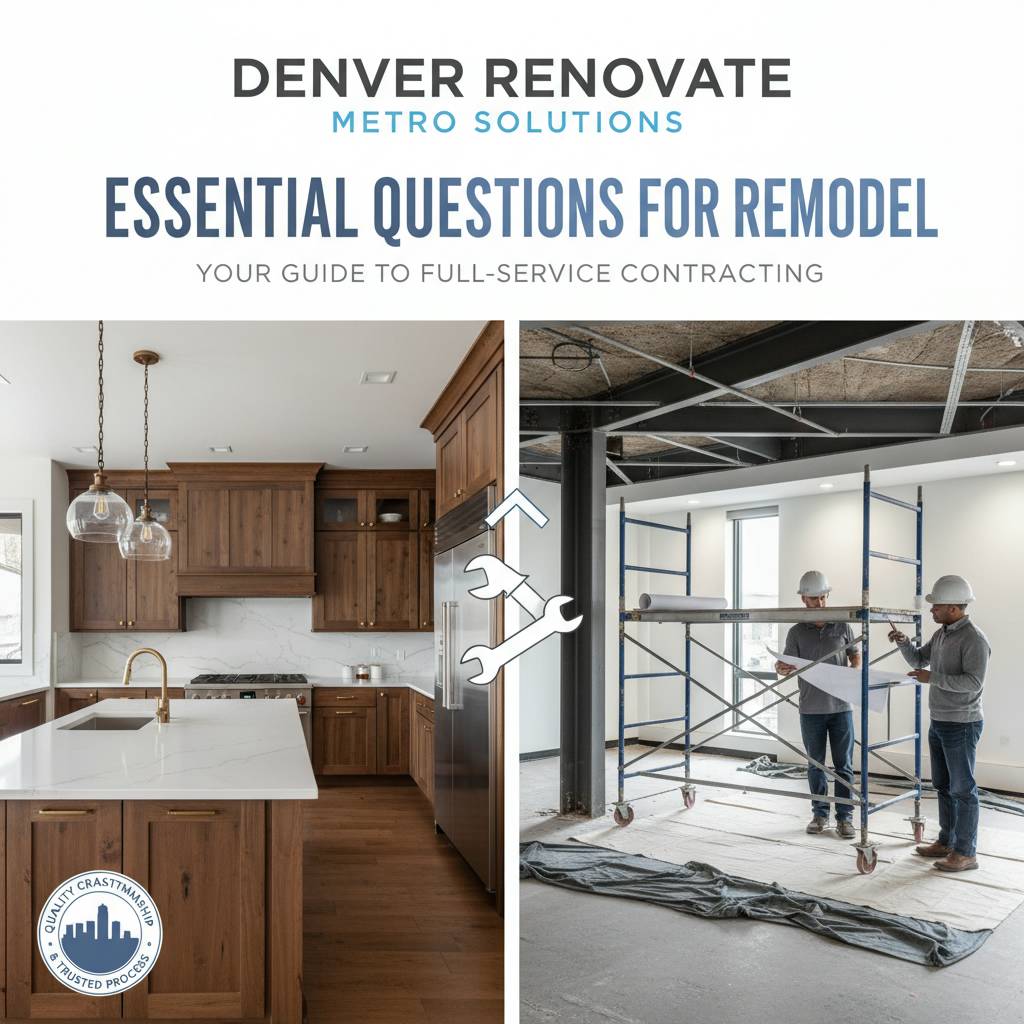 Organize your inquiry around three practical buckets: scope and materials, timeline and scheduling, and payment and contract terms. These categories capture the most consequential differences between quotes. Asking targeted questions in each area lets you compare not only price, but also risk, scheduling flexibility, and how surprises will be addressed. Below you'll find both high-level prompts and specific follow-ups to use when reviewing proposals.
Scope and materials: what's included and what isn't
Begin by asking the contractor to describe exactly what is included in the quoted scope. Which walls are being removed or modified, what finishes are included, and how are existing conditions being handled if concealed issues are discovered? Ask for manufacturer names, product models, and finish levels for major items so you can judge the quote against other offers. Also ask whether the contractor will provide samples or mock-ups for approval before ordering.
- What specific materials and brands are included for cabinets, countertops, flooring, and fixtures?
- Are finishes chosen to meet durability and maintenance expectations or are they budget placeholder allowances?
- How will unforeseen conditions, such as mold or rotten framing, be identified and priced?
Timeline and scheduling: how long and who coordinates tasks
Ask for a realistic start and completion date and request a milestone schedule that shows sequencing-demo, framing, rough-in inspections, drywall, finishes, and final walkthrough. Ask who coordinates subcontractors and permits, and whether the schedule accounts for lead times on long-lead items like custom cabinets or specialized appliances. Delays are common; a good contractor will explain contingencies and how they communicate schedule changes.
Get clarity about daily or weekly work patterns and any restrictions that apply to on-site hours. If the remodel affects living areas, ask how the contractor will protect the rest of the home and manage dust, noise, and waste removal. Contractors with consistent systems for site protection and waste management reduce stress and help projects finish closer to the planned timeline.
Payment structure and contract terms: protecting both sides
Payment terms vary widely and significantly affect your cash flow and protection. Ask for a clear payment schedule tied to milestones rather than arbitrary dates. For example, a common structure might include a deposit, payments at framing and drywall completion, and a final payment at substantial completion. Never pay the entire price up front. Confirm whether permits and inspections are included in the contract price or invoiced separately.
- What are the deposit and progress payment amounts? Are they tied to specific completion milestones?
- How are change orders documented and priced? Is there an hourly labor rate for out-of-scope work?
- What warranties are provided on workmanship and materials, and who handles warranty claims?
Practical, specific questions to include in your checklist
To help you gather consistent information from multiple contractors, use a short checklist of specific questions. Start with identification and licensing, then move to insurance, references, and dispute resolution. Licensing and insurance protect you if something goes wrong; references and photo documentation of past projects reveal whether the firm delivers on promises. Always verify license numbers and insurance certificates independently when possible.
- Can you provide your contractor license number and current insurance certificates?
- Do you carry general liability and workers' compensation, and what are the coverage limits?
- Can you share references from projects with similar scope and budget, and may I visit a current job site?
Beyond credentials, ask about subcontractors: are they employees or independent, and how long has the contractor worked with them? Consistent teams typically yield better coordination and fewer surprises. Learn how the contractor documents progress-daily reports, photos, or an online portal-because good documentation speeds decision-making and provides a record if disputes arise.
How to evaluate and compare line items
Quotes often present costs in different formats, which complicates direct comparison. Look at the level of detail: a transparent line item will describe the work, materials, and labor hours or rates. Items such as "Finish Allowance" without a realistic range or description are less useful than an allowance that states a dollar range and the brands or grade included. When comparing, normalize assumptions-either confirm identical allowances across bids or adjust numbers to a consistent baseline for fair comparison.
Below is a compact table showing typical line item categories and what to ask when comparing them. Use this approach to convert abstract line items into comparable facts so you can evaluate cost, quality, and risk more objectively.
| Line Item | Typical Range | Key Question |
|---|---|---|
| Cabinets | $4,000-$25,000 | Are cabinets stock, semi-custom, or custom? Which warranty and finish are included? |
| Countertops | $75-$200 per sq ft | What material and thickness are specified? Does price include templating and install? |
| Flooring | $3-$15 per sq ft | Is underlayment and transitions included? What is the expected lifespan? |
Red flags to watch for and how to negotiate smartly
 Certain responses or omissions are signs you should pause before signing. Red flags include overly low bids that lack details, resistance to putting promises in writing, vague change order procedures, or unclear warranty language. If a contractor avoids providing references, wiring information, or proof of insurance, treat that as a significant concern. A professional remodeler welcomes scrutiny and will provide clear documentation.
Negotiation is not about forcing the lowest price; it's about clarifying value. If two contractors differ on price, ask them to explain the difference by line item. Sometimes paying more for experienced project management, a longer warranty, or higher-quality subcontractors is the smarter long-term investment. Consider asking for trade-offs: could you save by choosing a different finish or extending the timeline to accommodate bulk ordering discounts?
- Ask for a written proposal revision if you negotiate scope or finishes-never accept verbal adjustments only.
- Request a list of what would trigger a change order and an example of typical change order documentation.
- Confirm dispute resolution steps-mediation, arbitration, or small claims-before work begins.
Real-world examples and quick case studies
To illustrate how questions change outcomes, consider two homeowners renovating similar kitchens. Homeowner A accepted the first lump-sum bid without asking about allowances or lead times. Mid-project, the chosen countertop was backordered and the contractor invoiced additional storage and temp kitchen costs. Homeowner B requested detailed allowances, a milestone schedule, and a backup plan for long-lead items before signing. That homeowner experienced fewer delays and had a clear path for decisions when selections changed.
Another common scenario involves structural surprises. One quote included a contingency line for "unknown structural repairs" without a stated range. A better approach is to ask for a defined contingency percentage or a not-to-exceed amount for hidden conditions. That gives homeowners predictability while still allowing the contractor to address safety-critical issues without repeated stop-work disputes.
Final checklist and next steps to take with any quote
Before you decide, run each proposal through a consistent checklist: verify licensing and insurance, confirm the scope line-by-line, compare allowances and brands, ensure a milestone-based payment plan, and read warranty language carefully. Ask each contractor the same set of questions to create a fair comparison. Document responses in a simple spreadsheet so you can visually compare scope, assumed materials, timeline, and payment terms side-by-side.
When you need help interpreting line items or want an experienced pair of eyes to walk through a quote, contact Riley Riley Construction. We can review proposals with you, explain each line item in plain language, and help you decide which bid reflects the best value and lowest risk. If you prefer, request an on-site quote review so we can see existing conditions and provide tailored recommendations.
Contact and next steps
If you'd like a guided walkthrough of a remodeling quote, Riley Riley Construction is ready to help. Our team can review your bids, highlight differences in scope and allowances, and suggest specific questions to ask each contractor. For a conversation or to schedule an on-site review, call us at 17207828897 and mention that you'd like a quote review- or another specialist will take the time to walk you line-by-line.

As a next step, gather the bids you've received and note any unclear line items or missing assumptions. Bring those documents when you call or upload them if the contractor offers an online review portal. Clear communication up front reduces surprises later and helps you select a proposal that reflects both your priorities and the realities of construction.
Ready to make an informed choice? Call Riley Riley Construction at 17207828897 to schedule a walkthrough of your quotes and get clarity on scope, timeline, and payment structure. We'll help you compare offers so you can choose the best proposal with confidence.