
How To Tell If Project Needs Full Service Remodel
Many homeowners ask how to tell if a project needs a full-service remodel or a smaller update. Riley Riley Construction evaluates structural systems code issues and lifestyle goals to make that call. Call 17207828897 to schedule a professional assessment and clear recommendations. This page will guide readers toward the right level of investment.
Deciding whether your project requires a full-service remodel or a smaller update is part technical assessment and part lifestyle planning. Homeowners often ask, "how to tell if project needs full-service remodel?" because the choice determines budget, timeline, disruption, and ultimately the value you receive from your investment. In the paragraphs that follow, we'll walk through the practical signs and the decision-making steps that help you choose confidently.
At Riley Riley Construction, we blend building science, local code awareness, and an understanding of how people actually live in their homes. That means we look beyond cosmetics to find the root causes that make a minor facelift inadequate or reveal opportunities where a simple update will deliver big payoff. If you like, call 17207828897 to schedule a professional assessment and get clear, prioritized recommendations tailored to your home and your goals.
Why this choice matters: cost, disruption, and value
There's a big difference between a cosmetic refresh and a full-service remodel. A small update can often be completed in a matter of days or weeks and keeps disruption low, whereas a full remodel may require weeks to months of work, temporary relocation, and larger upfront costs. Beyond immediate inconvenience, the wrong level of intervention can leave you paying twice-first for the quick fix, then again when deeper problems later demand a full remodel.
Making the right call also affects long-term value. A thoughtfully executed full-service remodel can improve livability, correct underlying building code or structural issues, and increase resale value in ways a surface update cannot. Conversely, spending a large sum on a full remodel when a targeted update would have resolved your main concerns is an unnecessary expense. Our goal here is to give you practical indicators that point toward the appropriate level of investment.
Signs you likely need a full-service remodel
 Certain problems are red flags that a full-service remodel is necessary. Structural issues such as foundation movement, sagging floors, or widespread rot require more than new paint. Similarly, major mechanical system failures, a home that doesn't meet current electrical or plumbing safety codes, or chronic moisture and mold problems all typically call for a comprehensive intervention-because these are systemic, not cosmetic.
Other indicators include layout limitations that constrain how you live-narrow kitchens that prevent multiple cooks, a bathroom layout that blocks accessibility, or a floor plan that forces family members to pass through private spaces. If you want to change the structural footprint, add new rooms, or rearrange load-bearing walls, you're looking at a full-service remodel that will involve permits, structural engineering, and coordinated trades.
- Evidence of structural failure: foundation cracks, settling, or uneven floors
- Outdated or unsafe electrical systems: knob-and-tube wiring, overloaded panels
- Plumbing with frequent leaks or old galvanized pipes prone to corrosion
- Widespread water intrusion or mold that affects multiple areas
- Desire to change the home's footprint or remove load-bearing walls
- Homes not meeting current accessibility standards where you plan long-term aging-in-place
When a smaller update is sufficient
Smaller updates are ideal when the underlying building systems are sound and the changes are primarily aesthetic or functional without altering structural elements. Examples include repainting walls, replacing kitchen cabinet doors or countertops, updating light fixtures, or swapping flooring in a single room. These updates typically improve appearance and day-to-day comfort while minimizing time away from the home and keeping costs lower.
Simple changes can also provide excellent return on investment when performed thoughtfully. Updating kitchen hardware, adding new faucets, or installing energy-efficient lighting can modernize a space without the need for permits or major coordination. If your goal is a fresher look, better storage, or minor energy savings, a targeted update may be all you need instead of a full remodel.
- Cosmetic refresh: paint, trim, tile, and new fixtures
- Cabinet refacing or new doors instead of full replacement
- Flooring replacement in single rooms or spot repairs
- Minor layout adjustments that don't affect structural walls
- Systems improvements like new appliances or HVAC tune-ups
How Riley Riley Construction evaluates your project
Our evaluation begins with a site visit and a listening session. We ask about how you use the space today, what annoys you, what you love, and how you want the space to feel. That helps us prioritize lifestyle goals. Then we perform a systems check: scan for moisture, inspect electrical panels, review plumbing runs, and assess structural elements. This combined approach ensures the recommendation addresses both code issues and your daily routines.
After the inspection, we document findings and present clear options. Usually we'll outline a few pathways: a scoped update with cost and timeline, a mid-level renovation that addresses multiple systems, and a full-service remodel that includes structural and code upgrades. Each option includes the expected disruption, potential permit needs, and long-term benefits so you can weigh them against budget and time constraints. If you prefer, can walk you through an early design sketch to visualize each option.
Step-by-step decision framework
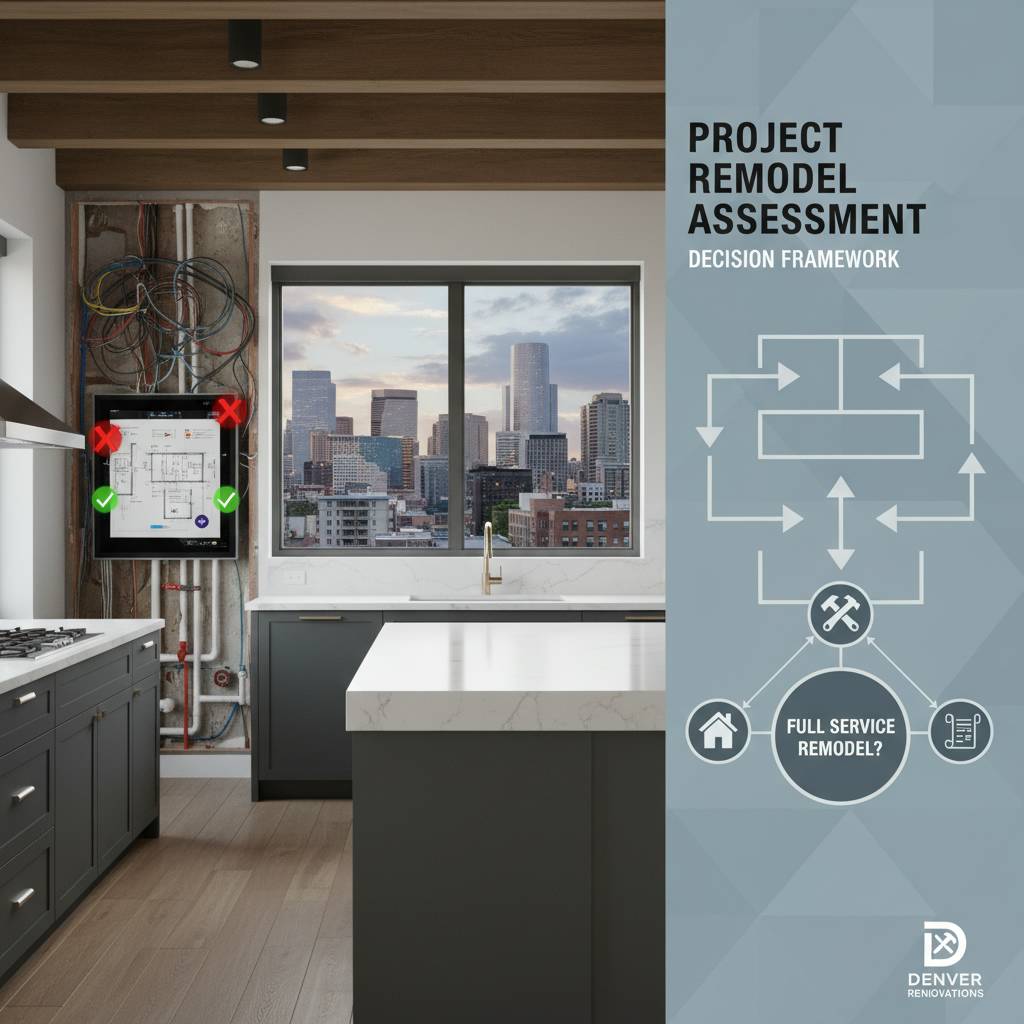 Make the decision more manageable by following a straightforward framework: first, verify whether there are safety, health, or code compliance concerns; second, assess whether the layout fundamentally prevents the lifestyle changes you want; third, estimate the incremental cost between a good-quality update and a full remodel; finally, factor in intangible benefits like resale value, energy savings, and comfort. Breaking the choice into these steps reduces uncertainty and focuses attention on what matters.
- Identify safety or code deficiencies that must be fixed.
- Decide if layout or footprint changes are essential for your goals.
- Get cost comparisons for update vs. remodel, including hidden costs.
- Assess timing and disruption tolerances for your household.
- Prioritize interventions by long- and short-term value.
| Aspect | Smaller Update | Full-Service Remodel |
|---|---|---|
| Typical Cost Range | $75-$200 per sq ft for targeted work (varies by scope) | $200-$400 per sq ft when structure and systems change |
| Timeline | Days to a few weeks | Several weeks to months |
| Permit Needs | Usually minimal or none | Often required: structural, electrical, plumbing |
| Disruption | Low to moderate | Moderate to high; may require temporary relocation |
Case studies: practical examples
Case study one: a 1940s bungalow with a small, choppy kitchen. The homeowner wanted more cabinet space and modern appliances but discovered during inspection that the electrical panel was unsafe and the plumbing had multiple leaks. Because the systems were at risk, what began as a cosmetic project became a full-service remodel to replace wiring, re-route plumbing, and reconfigure the layout. The result was a safe, efficient kitchen designed for today's needs and code-compliant systems for decades to come.
Case study two: a suburban home with an outdated bathroom and worn tile. The inspection showed sound structure and no major system issues, so the homeowner opted for a smaller update: new vanity, refreshed tile, a modern showerhead, and improved lighting. The project finished quickly, cost substantially less than a full gut remodel, and delivered exactly the modern look the family wanted without major disruption.
Practical tips to avoid common pitfalls
One common mistake is starting with finishes before confirming systems. Buying tile and fixtures early is tempting, but if structural or plumbing changes are needed, your selections may not fit or could be damaged during demolition. Another pitfall is underestimating the permit process; local review can add time and sometimes requires design modifications. Finally, set aside a contingency-10-20% for updates and 15-25% for full remodels-because hidden conditions often surface once walls come down.
Budget realistically for temporary living costs if a full remodel is likely. Even when you can remain in the home, parts of the house may be unusable for periods. Communicate openly with your contractor about scheduling and access, and ask for a written scope and milestones. A clear contract that includes allowances, change-order processes, and payment schedule reduces surprises and keeps the project on track.
When to call in professionals-and what to expect
If you're asking how to tell if project needs full-service remodel and you see any structural, electrical, or plumbing red flags, call a professional for an assessment. A qualified home remodeling firm will bring or coordinate with structural engineers, licensed electricians, plumbers, and permit specialists. Expect an initial walkthrough, a written report, and a proposal that lays out options with pros and cons. That documentation is valuable whether you decide to update or proceed with a full remodel.

When choosing a contractor, look for experience with similar projects, clear communication, and references. Verify licenses and insurance, and request examples of completed work. Professionals who offer design-build services can streamline the process by combining design, engineering, and construction under one contract, which often reduces the friction that comes from coordinating multiple vendors.
Next steps: a simple plan you can follow
Start with a prioritized checklist. First, identify any safety risks or immediate code issues. Second, write down your lifestyle goals and rank them. Third, request an on-site assessment from a reputable firm so you can compare a scoped update versus a full remodel. Fourth, review a realistic budget and timeline for each option and decide whether an immediate investment or phased approach makes the most sense for your household.
For many homeowners, a phased approach makes sense: address critical systems first, then tackle cosmetic upgrades in a later phase. This allows you to spread costs while ensuring that the foundation, electrical, and plumbing are safe and functional before you invest heavily in finishes. If your timeline is flexible, planning a phased remodel can yield better material choices and allow for more deliberate design decisions.
Call to action
If you're uncertain whether your project needs a full-service remodel or a smaller update, the right first step is a professional assessment. Riley Riley Construction will evaluate structural systems, code compliance, and your lifestyle goals, then present clear, prioritized options so you can choose the best path forward. Call 17207828897 to schedule an appointment.
We know these decisions can feel overwhelming. A short walkthrough and a thoughtful report often remove the guesswork and save money in the long run by pointing you to exactly what your home needs. Reach out to Riley Riley Construction and let us help you turn uncertainty into a clear plan that fits your goals and budget.
Contact Riley Riley Construction today at 17207828897 to get started with a professional assessment and tailored recommendations. We look forward to helping you find the right level of investment for your home.