
How A Full Service Remodel Project Is Managed
Introduction: Understanding the Full-Service Remodel Experience
When owners ask how a full service remodel project is managed from start to finish, they want clarity, confidence, and a clear set of expectations. Riley Riley Construction approaches every renovation with a defined process that balances creativity and discipline. From the earliest design conversations through final inspections and warranty follow-up, we structure work so that homeowners understand milestones, responsibilities, and delivery timelines without surprises.
Our goal is to reassure clients with transparent oversight, proactive communication, and built-in quality checkpoints. This page outlines how a full service remodel project is managed, highlighting key stages, quality controls, cost and schedule practices, and communication workflows. Reading this will help you picture how your renovation will unfold and where you can expect to see decisions, approvals, and visible progress.
Project Phases: A Clear Roadmap from Concept to Completion
Design and Preconstruction
The design and preconstruction phase sets the tone for the entire remodel. We begin with a thorough needs analysis, site evaluation, and budget alignment. Design iterations include schematic options and material selections, occasionally with 3D visuals or sample boards. Simultaneously we assemble a permitting and subcontractor plan so that once designs are approved, the project can move into construction with minimal administrative delay.
During preconstruction we create a preliminary schedule and a refined cost estimate that accounts for known site conditions and selected finishes. This is the phase where owners make the most impactful choices; to support that decision-making we provide comparisons, pros and cons for materials, and realistic timelines tied to procurement lead times and permit cycles.
Permitting, Procurement, and Mobilization
Permitting and procurement are parallel tracks that require careful coordination. We manage permit applications and follow-up with the authorities having jurisdiction to secure approvals promptly. At the same time, procurement teams place orders for long-lead items-windows, cabinetry, specialty fixtures-so they arrive on time. Proper mobilization includes staging the site, setting safety protocols, and scheduling trades to create an efficient, sequenced workflow.
Well-managed mobilization reduces interruptions: deliveries are inspected on arrival, materials are labeled and stored safely, and the crew receives a clear plan for the first two weeks of work. This early momentum often determines whether a remodel stays on schedule and budget, and it helps owners see measurable progress quickly.
Construction and Finishing
Construction is organized into clearly defined work packages: demolition, structural framing and rough-ins, mechanical/electrical/plumbing rough work, insulation/drywall, and finishes. Each package has an owner on the project team who coordinates trades and inspects workmanship according to established checklists. Progress is tracked daily, and milestone inspections are scheduled to verify compliance with drawings and codes.
Finishes are installed only after quality checks confirm readiness: walls primed, mechanical systems tested, and substrates confirmed flat and level. Final punch lists are developed collaboratively and resolved promptly. The handover sequence includes client walkthroughs, documentation of warranties, operations manuals, and an orientation to systems so homeowners feel confident living in and caring for their remodeled space.
Quality Checkpoints and Assurance Practices
 Maintaining high quality throughout a remodel requires intentional, recurring checkpoints. Riley Riley Construction structures inspections at key junctions-before and after demolition, after rough-in work, prior to drywall, before finishes, and at final completion. Each checkpoint uses a standardized checklist to evaluate structural, thermal, and finish-level conditions, ensuring nothing is missed and every trade meets established expectations.
These checkpoints are supported by photographic records, measurement logs, and sign-offs from responsible supervisors. When an issue is identified, we log it in a digital system, assign the corrective action to a responsible party, and set a due date. That documented trail increases accountability and creates a reliable archive for future maintenance or warranty work.
| Stage | What We Inspect | Typical Acceptance Criteria |
|---|---|---|
| Post-Demolition | Existing structure, hazardous materials removal, site safety | Safe conditions, clear debris, no unforeseen structural damage |
| Rough-In | Framing, MEP routing, structural attachments | Compliance with plans, code readiness, proper clearances |
| Pre-Finish | Drywall, finishes substrates, paint priming | Flat surfaces, correct tolerances, consistent substrate prep |
| Final | Fixtures, appliances, finishes, system testing | Full operation, aesthetic standards met, punch list complete |
Communication Practices: Keeping Owners Informed and Engaged
Clear, consistent communication is central to answering the question of how a full service remodel project is managed. We assign each project a single point of contact who coordinates updates, facilitates approvals, and addresses concerns quickly. That project manager provides weekly progress reports, photographs, and an updated schedule so owners always know the project status without needing to chase disparate trade contacts.
We tailor communication to client preferences-some owners prefer in-depth weekly calls, others prefer concise email summaries. Your project manager, , or another designated lead will establish those preferences in the kickoff meeting and adhere to them. For time-sensitive items, we use phone or text messaging, and we maintain a shared document repository for drawings, permits, and change orders.
Typical Communication Touchpoints
- Kickoff meeting: confirm scope, schedule, and communication plan.
- Weekly progress updates: photos, tasks completed, issues pending.
- Milestone meetings: permit approvals, major deliveries, pre-finish review.
- Client walkthroughs: mid-construction and pre-handover sessions.
Budget, Cost Control, and Transparent Billing
Owners frequently want to know how a full service remodel project is managed with respect to cost. We begin with a detailed estimate and update it during preconstruction as selections are made and unknowns are resolved. Throughout construction we track expenses in real time and provide clear invoices showing allocated costs for labor, materials, subcontractors, and contingency usage.
Change orders are a common concern during remodels. To manage them, we require written authorization for scope changes and provide an itemized cost and schedule impact analysis before proceeding. This protocol protects owners from surprise charges and helps decision-makers weigh trade-offs between cost, schedule, and design intent.
- Contingency management: we recommend and explain contingency reserve levels for unforeseen conditions.
- Payment schedule: milestones tied to deliverables rather than arbitrary dates.
- Regular cost reports: line-item updates so owners see exactly where money has been spent.
Schedule Management and Timeline Transparency
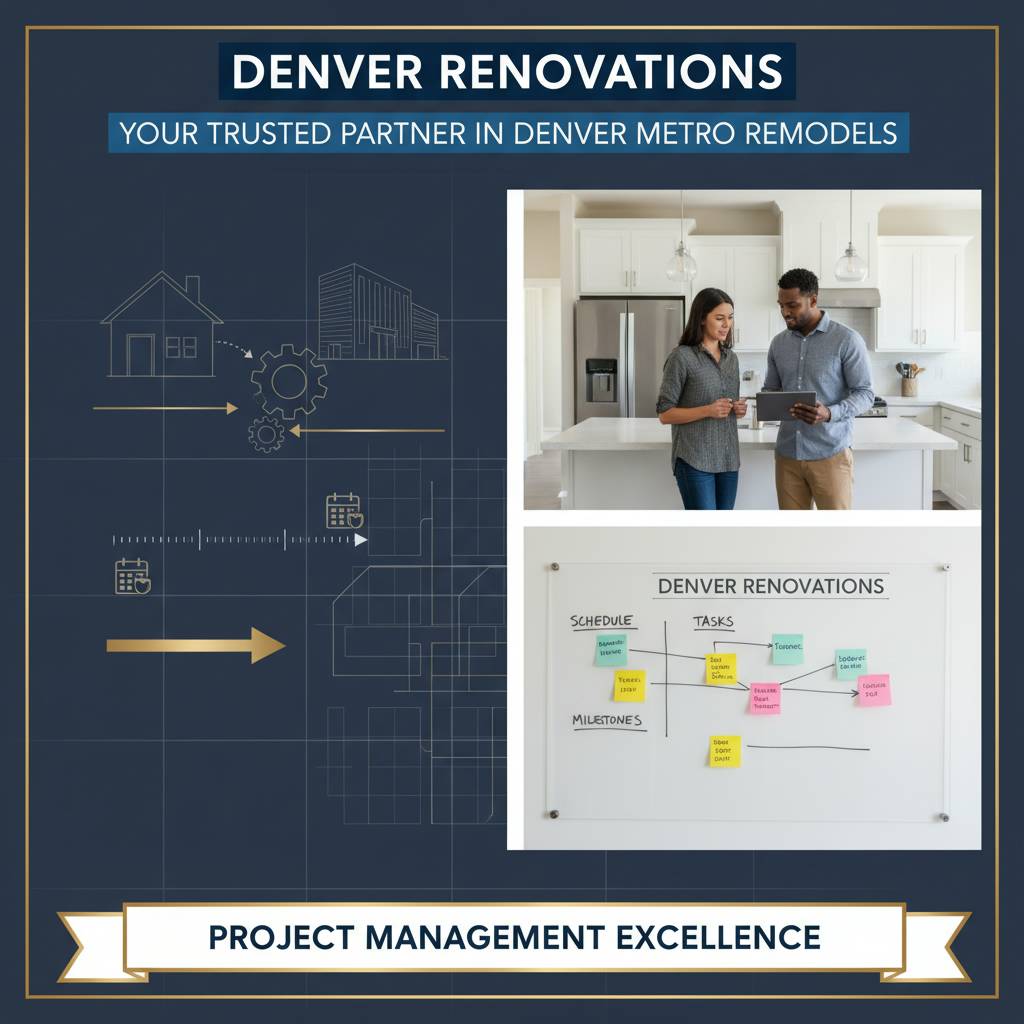 A realistic schedule is one of the most reassuring elements for owners. We build timelines that account for permitting, procurement lead times, trade availability, and seasonal constraints. Each schedule includes float for critical activities and is updated weekly to reflect actual progress and any newly identified delays. This transparency reduces anxiety and creates a predictable rhythm for decision-making and occupancy planning.
When delays occur, we communicate causes and recovery plans immediately. Whether a material shipment is late or an inspection is rescheduled, owners receive a clear explanation of the impact on completion dates and the steps we are taking to mitigate the delay. That responsiveness is a key element of how a full service remodel project is managed to meet expectations.
Risk Management, Change Control, and Warranty Support
Every remodel carries risk: hidden conditions, code complexities, or changing client preferences. We proactively identify and document risks in the preconstruction phase and maintain a risk register throughout the project. For each risk we define probability, potential impact, and mitigation strategies. This approach turns unknowns into manageable items rather than emergent crises.
Change control is formalized through written change orders that include cost and schedule consequences. We keep changes visible to the owner and tied to design or budget approvals so the project integrity remains intact. After handover, we provide warranty documentation and a simple process for reporting issues. Our commitment is to correct warranty items swiftly, with a tracked timeline and verified completion.
Case Study: Typical Remodel Timeline and Outcomes
To illustrate how a full service remodel project is managed, consider a mid-sized kitchen and adjacent living area renovation. The project starts with a two-week discovery and schematic design phase, followed by four weeks of permits and procurement for long-lead items. Construction typically takes 10-14 weeks depending on structural scope and site conditions. Owners see staged progress: demolition week, rough-in weeks, and finish weeks culminating in a punch list and final walkthrough.
In our example project, quality checkpoints caught a substrate inconsistency before cabinetry installation; the issue was corrected within 48 hours with minimal schedule impact because the procurement had been sequenced to allow this recovery time. The documented trade coordination and weekly reporting demonstrated how transparency and planning reduce the probability that one problem creates cascading delays.
Frequently Asked Questions
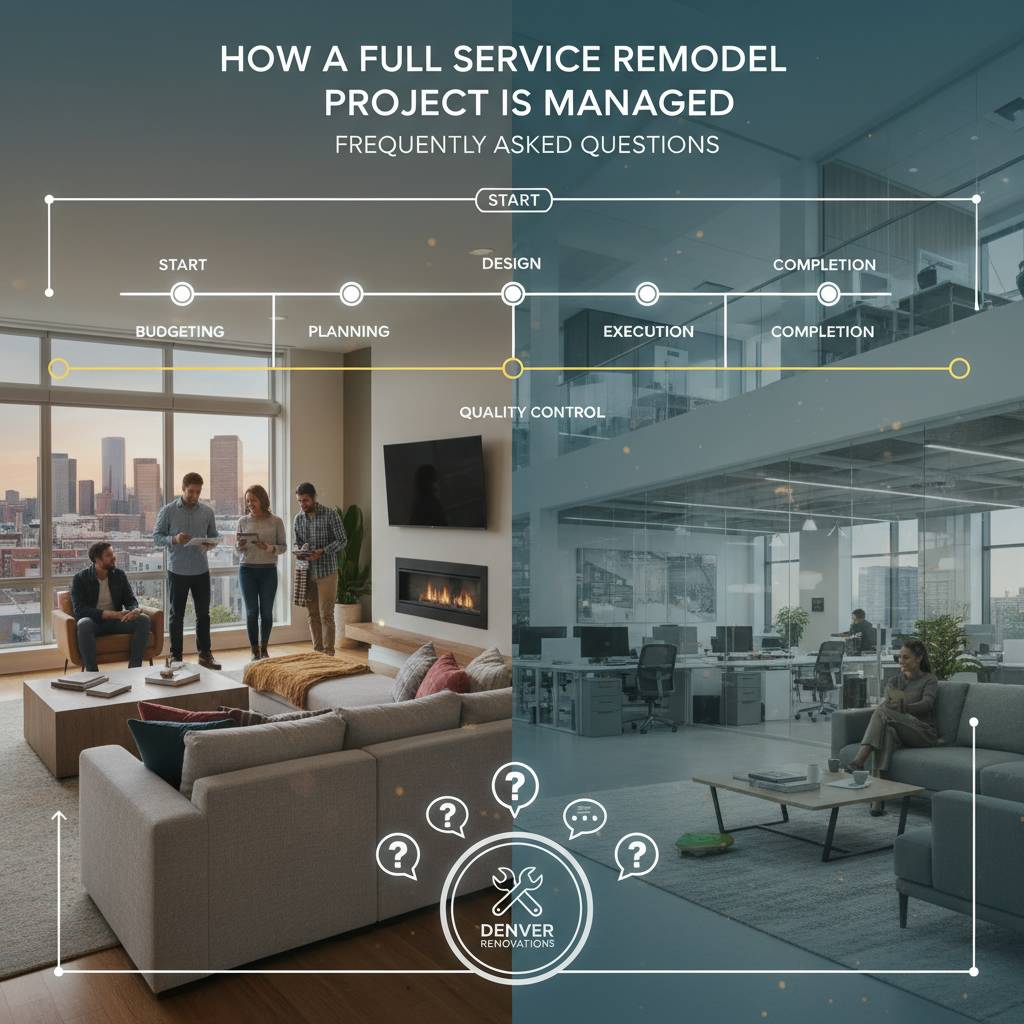
How often will I receive updates about my remodel?
Owners typically receive a weekly written progress update plus photos and an updated schedule. For urgent matters, your project manager will call immediately. We adapt the frequency and format to your preference so you receive the level of detail you want without being overwhelmed.
What happens if an unexpected structural problem is discovered?
If a hidden condition arises, we document it, propose a corrective solution, and provide a cost and time estimate for the remedy. We schedule a homeowner decision point before executing changes that materially affect cost or schedule. This method preserves clarity and prevents costly assumptions, reflecting best practices in how a full service remodel project is managed.
Closing and Next Steps
Renovations are complex, but a clear process, consistent quality checkpoints, and open communication make them manageable and even enjoyable. Riley Riley Construction emphasizes careful planning, reliable trade coordination, and prompt responses so that homeowners feel in control from concept to completion. Our documented approach outlines exactly how a full service remodel project is managed and provides the reassurance clients need to move forward with confidence.
If you'd like to review our project management approach for your renovation, call us to schedule a detailed walkthrough. For quick inquiries or to set up a consultation, contact Riley Riley Construction at 17207828897 and we'll connect you with a project specialist.
We look forward to discussing your project goals and showing you how proactive management, clear checkpoints, and responsive communication translate into a successful remodel. Contact Riley Riley Construction at 17207828897 to get started.