
Hidden Costs In Full Service Remodels
Awareness of hidden costs in full service remodels prevents budget surprises that stall projects
Every full service remodel carries more than the visible price of materials and labor. At Riley Riley Construction, we prioritize transparency so homeowners and project stakeholders understand the range of potential expenses that can derail schedules and increase budgets. Recognizing the phrase hidden costs in full service remodels doesn't mean being pessimistic; it means planning deliberately, allocating contingencies, and choosing contract terms that protect both the timeline and the bottom line.
Common hidden costs and where they originate
Hidden costs often arise from the condition of the home, changing regulations, and decisions made during construction. For many projects the initial estimate covers scope, fixtures, and standard trades, but additional items frequently appear only after demolition or during permitting. Common sources include unforeseen structural repairs, outdated electrical or plumbing systems, hazardous material abatement, and code-related upgrades that were not part of the original brief.
These costs are distinct from optional upgrades or aesthetic choices; they are reactive expenses required to bring an existing property to a safe, code-compliant, and functional state. The longer these issues remain undiscovered, the more likely they are to interrupt the schedule and compound labor and overhead expenses.
Examples of typical hidden items
- Hazardous material removal (asbestos, lead): often requires testing and abatement protocols.
- Structural reinforcement: beams, joists, or foundation work discovered after demolition.
- Electrical service upgrades: older panels may need replacement to handle modern loads.
- Plumbing reroutes or main line replacement: hidden leaks or obsolete piping uncovered during remodeling.
- Permit-related corrections or inspections
- Waterproofing and mold remediation following concealed water damage
- Site access, staging, and protection for landscaping, driveways, or neighboring units
| Hidden Item | Typical Cost Range | When It Usually Appears |
|---|---|---|
| Hazardous material abatement | $500-$7,500 | After initial testing or demolition |
| Structural repairs | $1,200-$25,000 | After load-bearing walls or joists are exposed |
| Electrical service upgrade | $1,000-$8,000 | During rough-in or permitting |
| Plumbing main or reroute | $800-$15,000 | When old pipes fail pressure or integrity tests |
How to identify potential hidden costs before they escalate
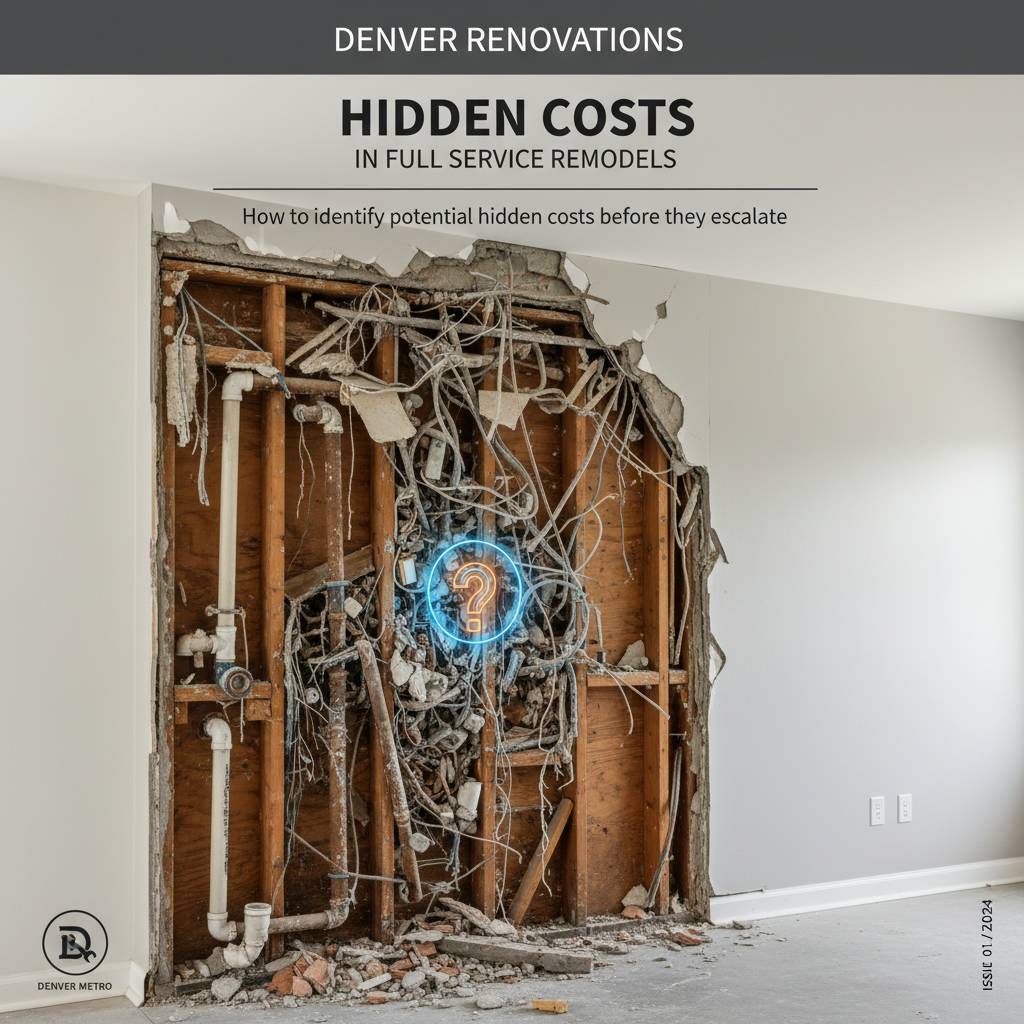 Early identification reduces surprises. A detailed pre-construction investigation should combine visual inspections with selective testing: thermal imaging to spot moisture, core samples for hazardous materials, and professional structural reviews where loads may change. Engaging specialty consultants-historical home experts, mechanical engineers, or licensed plumbers-before demolition often saves time and money compared to addressing problems reactively.
Another practical step is a phased approach to design: finalize decisions that are irreversible before demolition begins, while keeping flexible allowances for finishes that can be adjusted if an unexpected condition arises. This method protects the critical path of the schedule while controlling the financial impact of late changes.
Key pre-construction checks
- Targeted destructive investigation in suspect areas rather than full demo-drill holes, remove small sections to inspect framing.
- Code and permit review with municipal officials to identify potential compliance costs early.
- System testing-pressure tests for plumbing, load calculations for electrical, and HVAC capacity assessments.
- Soil and drainage verification for projects affecting foundations or exterior grade.
Contingency budgeting and cost control measures
Constructing a realistic contingency is one of the most effective tools for managing hidden costs in full service remodels. Industry norms often suggest a contingency of 10%-20% for remodels, but the exact number should reflect property age, project complexity, and findings from pre-construction investigations. For older homes or large scope changes, higher contingencies provide a buffer that prevents work stoppages when surprises occur.
Contingency funds are most valuable when governed by clear rules: define what the contingency covers, who authorizes its use, and how adjustments are communicated to the client. A transparent change order process ensures that every unexpected item is documented, priced, and approved before work proceeds, which protects schedules and prevents disputes later.
Cost control techniques
- Staged purchasing for long-lead items to avoid rush charges or storage fees.
- Competitive subcontractor bids for specialist work revealed during the project.
- Value engineering sessions that preserve design intent while lowering cost impacts from unexpected items.
- Regular cost-to-complete forecasts and weekly owner updates to catch trend changes quickly.
Contract strategies to limit exposure and align incentives
How contracts are written materially affects who bears the risk of hidden costs. A lump-sum contract places more risk on the contractor, which can translate to higher initial pricing or more conservative allowances. Cost-plus contracts with a defined fee can offer transparency and flexibility, but they require clear auditing rights and a cap mechanism to protect owners against runaway costs.
Hybrid approaches-such as a target-cost contract with shared savings-create alignment between owner and contractor and often lead to collaborative problem-solving when unexpected issues arise. Regardless of contract type, include an explicit contingency clause, defined change-order procedures, and dispute resolution processes so hidden costs are managed with minimal disruption.
Recommended contractual clauses
- Defined contingency amount and use approvals
- Detailed scope and exclusions to reduce ambiguity
- Change order template with time and cost impact sections
- Prompt notice requirements for discovered conditions
Practical site management and schedule protection
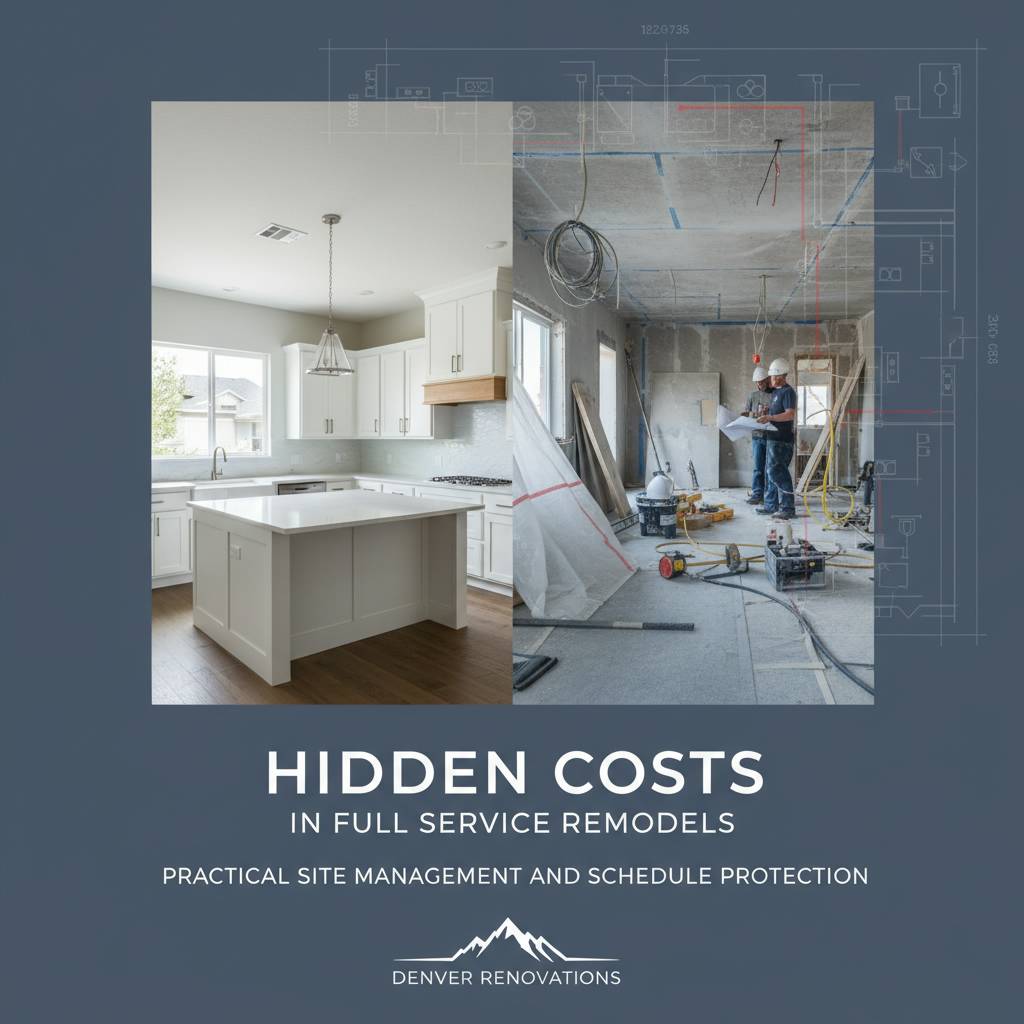 Hidden costs and schedule delays are often related. Effective site management mitigates both by reducing rework, protecting uncovered finishes, and limiting exposure to weather or theft. Protective scaffolding, moisture barriers, and temporary heating or dehumidification can carry a near-term cost but prevent expensive remediation later. For multi-unit or occupied projects, coordinating deliveries, noise mitigation, and neighbor access plans keeps operations smooth and reduces the likelihood of claims.
Change-driven delays are also expensive. Instituting a decision deadline for selections tied to schedule milestones forces timely choices and limits days lost to indecision. If a selection is delayed past its cutoff, a pre-agreed default option can keep production moving while preserving budget transparency for upgrades done later.
Real-world scenarios and mitigations
Consider a kitchen remodel where the homeowner requests a larger island after demolition begins. The additional cabinetry, island plumbing, and revised electrical layout can add weeks and significant labor cost. A robust mitigation technique is to lock-in the placement of major elements-appliances, plumbing stacks, and primary electrical runs-before entering demolition. That preserves the critical path and isolates late design choices to finishes rather than structural or utility work.
Another scenario: uncovering termite damage behind a wall. Immediate containment and repair may be required to protect the structure, and insurance may or may not cover the work depending on policy language. The pre-construction inspection that includes accessible cavity checks and a pest report reduces the likelihood of this becoming a project-stopping surprise.
Short case study
In a recent full service remodel, Riley Riley Construction encountered an original 1920s home with hidden knob-and-tube wiring. Detection occurred during the electrical rough-in and required both a panel upgrade and rewiring. Because the project retained a 15% contingency and had an agreed-upon change process, the upgrades were completed promptly without pausing other work. Clear communication with the owner and fast procurement of materials kept the final schedule impact to two weeks rather than months.
Questions homeowners should ask and next steps
Before signing a contract, homeowners should ask specific, actionable questions that reveal how a general contractor manages hidden costs. Examples include: What percentage contingency do you suggest for this property? How do you document and price unforeseen conditions? What is your typical change order turnaround, and who approves work if time is critical? Answers to these questions help evaluate whether a contractor has disciplined financial and schedule controls.
Additional valuable steps are to secure written estimates for potential items that might become necessary-such as hazardous material testing-and to require that the contract specify which allowances the base price includes. Regular, scheduled cost updates and an agreed meeting cadence keep surprises rare and small issues from becoming show-stoppers.
Call to action and how Riley Riley Construction helps
Planning for hidden costs in full service remodels saves time, reduces stress, and protects budgets. Riley Riley Construction specializes in comprehensive pre-construction evaluation, disciplined contingency management, and transparent change order administration. Our approach combines technical investigations, realistic budgeting, and contractual safeguards to keep projects moving and to preserve client confidence.
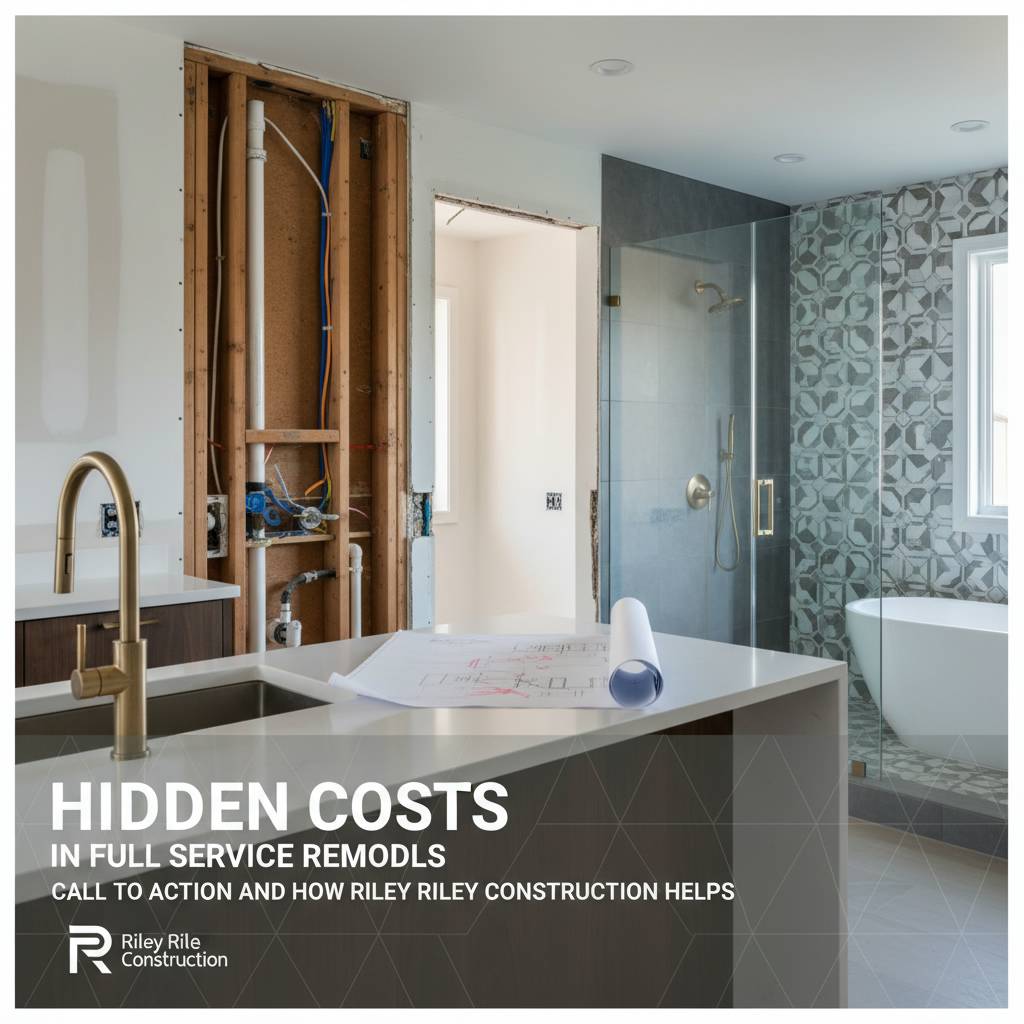
To discuss contingency planning, risk allocation, or a project-specific cost-control strategy, contact Riley Riley Construction at 17207828897. We can review your plans, outline typical hidden items for your property type, and recommend the right contingency range for your remodel.
For quick inquiries or to schedule a pre-construction review, call 17207828897 or request a consultation online. Protecting your schedule and budget starts with recognizing the common unknowns and preparing for them-let Riley Riley Construction guide you through that process.