
Full Service Remodeling Vs Design Build
Comparing full service remodeling vs design build helps owners select the best delivery method for their goals. Riley Riley Construction explains the differences in scope decision making and responsibility. Call 17207828897 to determine which approach fits your timeline and budget. This content will simplify complex choices for property owners.
Choosing between full service remodeling vs design build is a crucial step for property owners who want clarity, predictability, and a smooth execution. Riley Riley Construction brings practical experience to this comparison, helping you weigh important factors such as project scope, single-point responsibility, design control, and cost certainty. Whether you are updating a kitchen, renovating a multi-unit building, or planning a ground-up addition, understanding how each delivery method allocates responsibility and risk will help you reach the outcomes you want.
What each delivery method means in practice
Full service remodeling typically refers to a contractor-led approach in which the remodeling firm manages construction and coordinates subcontractors, permitting, and scheduling. In many cases, design work may be provided as part of the package or sourced separately, but the emphasis is on delivering a finished space through an established construction process. This model is often chosen by owners who want a hands-off experience during construction while still retaining design input up front.
Design build, by contrast, integrates design and construction under one contract and team from the outset. That unified team-often composed of architects, designers, and construction professionals-develops the design with a clear eye on cost, constructability, and schedule. The design-build model is intended to reduce fragmentation, speed decision-making, and lower the likelihood of conflicts between designers and builders during construction.
Key differences in scope, decision making, and responsibility
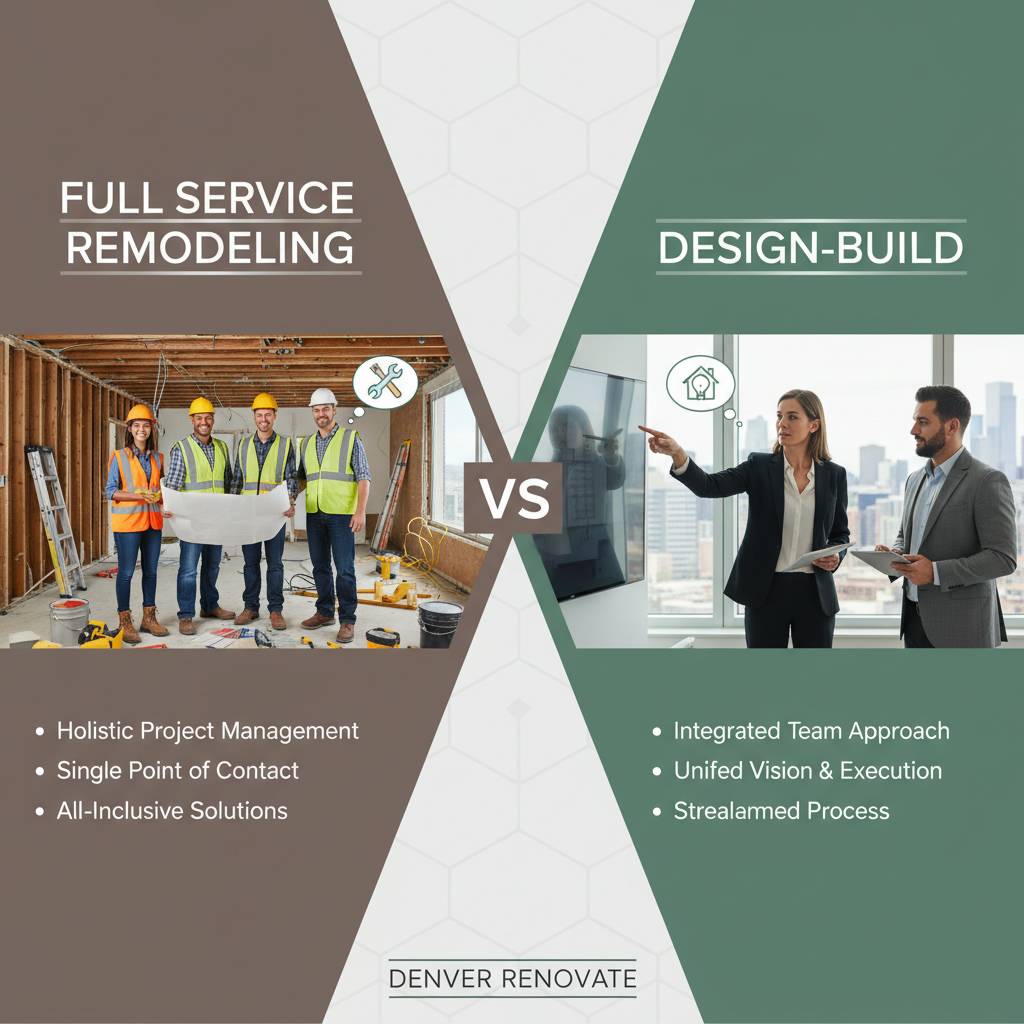 One of the most important distinctions between full service remodeling vs design build is how scope changes and decisions are handled. In full service remodeling, scope is often defined by a scope document or a set of drawings and then executed; changes during construction can trigger change orders and require negotiation between owner and contractor. The owner may retain greater control over finishes and specific selections if design work is separate.
Design build, on the other hand, places responsibility for scope stability and cost management with the design-build team. Because design and construction are developed concurrently, potential conflicts are typically resolved earlier. That does not eliminate change orders, but it can reduce surprises because the team is continuously translating design intent into buildable solutions while keeping the owner informed.
Who makes the decisions?
Decision-making authority varies by contract. In full service remodeling, the owner often retains final approval for design choices and material selections while the contractor controls means and methods. In design build, the team collaborates with the owner to make decisions, and the contract commonly grants the design-builder authority to make certain trade-offs to keep the project on budget and on schedule. Selecting the right level of owner involvement is part of choosing a delivery method that fits your comfort level.
Roles, risk allocation, and communication channels
Understanding who is accountable for what reduces friction on any construction project. Under full service remodeling, responsibility for execution, scheduling, and coordination is with the remodeling firm, but design responsibility may be split if an outside designer or architect is engaged. This split can require active owner participation to bridge communication between designer and builder when design and construction priorities conflict.
Design build consolidates accountability. The design-builder assumes integrated responsibility for design performance, code compliance, construction quality, and often warranty issues after completion. This single-point responsibility can benefit owners who prefer not to act as intermediary when disagreements arise, but it also requires vetting the design-build team's track record and contractual protections carefully.
| Feature | Full Service Remodeling | Design Build |
|---|---|---|
| Primary contractor role | Leads construction; may offer or coordinate design | Leads both design and construction with integrated team |
| Single-point responsibility | Partial; depends on whether design is included | High; design-builder assumes comprehensive responsibility |
| Change management | Change orders can be frequent if scope unclear | Early coordination reduces unexpected changes |
| Owner involvement | Often higher during construction to resolve design issues | Owner collaborates up front; less day-to-day involvement later |
| Ideal for | Owners who want construction expertise and tailored service | Owners who want streamlined delivery with out-of-conflict design |
Cost, timeline, and quality tradeoffs
When comparing full service remodeling vs design build, cost implications are top of mind. Full service remodeling may appear less costly in the proposal stage if design fees are separated, but unforeseen issues or late-stage design changes commonly increase the final price. Design build tends to offer more predictable total project costs because the team aligns design choices with budget targets early in the process. Typical remodeling costs vary widely; for example, some renovations run in the range of $75-$200 per square foot depending on scope and finishes.
Timeline is another critical factor. Design build can accelerate projects because design and construction activities overlap, reducing the overall calendar from concept to completion. Full service remodeling might take longer if design is completed fully before construction begins or if scope changes interrupt the schedule. Quality outcomes, however, are less about delivery method and more about the expertise of the team. A skilled full service remodeler can deliver exceptional results just as a capable design-build firm can; the difference lies in how they manage risk and communication.
Value engineering and cost control
Both approaches offer tools for cost control, but they apply them differently. Full service remodelers often value-engineer during bidding or construction by recommending alternate materials or methods to reduce cost. Design-build teams embed cost control into each design phase, proposing options that meet performance goals at predetermined price points. If preserving budget certainty is a primary objective, design build can be advantageous because it sets cost expectations earlier and makes trade-offs part of the design conversation.
Selection criteria: how owners should decide
 Selecting between full service remodeling vs design build starts with clarifying priorities. Ask whether budget certainty, schedule compression, design customization, or having a single accountable party is most important. Some owners want a high degree of design input and are comfortable coordinating separate consultants; others prefer the simplicity of a single contract and a team that solves integration issues for them. Identifying your tolerance for involvement and risk guides an effective choice.
Other practical selection criteria include the complexity of the project, the need for specialized design expertise, regulatory requirements, and site-specific constraints. For complex structural changes or projects with significant code or permitting hurdles, design build's integrated approach often streamlines the path from schematic design to inspections. For aesthetic-focused projects where the owner wants to partner with a specific architect, full service remodeling with a collaborative construction partner may be a better fit.
Questions to ask potential teams
- Do you provide references and case studies for similar projects?
- How do you manage scope changes and cost increases?
- Who will be my single point of contact during the project?
- What guarantees, warranties, or post-construction services do you offer?
- Can you provide a guaranteed maximum price (GMP) or fixed-price proposal?
Typical process steps and what to expect
Each delivery method follows a recognizably different process flow. Full service remodeling usually begins with a discovery and design phase (sometimes with third-party designers), followed by permit acquisition and construction mobilization. During construction, the remodeler coordinates subcontractors and communicates progress to the owner. Expect periodic selection deadlines, inspections, and a punch-list closeout phase.
Design build typically begins with a collaborative visioning stage where the owner, designer, and builder align on goals and budget. The team then progresses through schematic design, cost validation, and final design while keeping construction logistics and code compliance central to decisions. Once the design reaches a committed budget, construction documents are prepared and construction begins, often with fewer redesign cycles because constructability has been considered throughout.
Typical timeline milestones
- Initial consultation and scope definition (1-4 weeks)
- Schematic design and cost estimation (2-8 weeks)
- Permitting and approvals (varies widely by jurisdiction: 2-12 weeks)
- Construction phase (4-24 weeks depending on project size)
- Final inspection and occupancy (1-3 weeks)
Case examples and practical outcomes
Consider a kitchen remodel in a suburban home: a full service remodeler might take owner-approved drawings and proceed to coordinate trades, often delivering on a cost-plus or fixed-price basis for construction. The owner may be engaged in finish selections during construction; if a material is unavailable, the remodeler negotiates substitutions. This approach can work well for owners who value ongoing collaboration and individualized service.
For a larger, more integrated project-such as converting an old commercial space into modern apartments-design build can reduce risk by resolving structural and MEP (mechanical, electrical, plumbing) conflicts during the design phase. The design-builder can provide a single contract that covers both design performance and construction delivery, which simplifies financing and reduces the administrative burden for property owners. In many of these cases, the time saved and fewer change orders translate to measurable cost and schedule benefits.
Common FAQs: straightforward answers
Is one approach always cheaper?
No. Cost depends on scope clarity, team experience, and how well the project is managed. Design build often offers better early cost predictability, while full service remodeling can be competitive on price if scope is stable and the remodeling firm is efficient. Evaluate bids, ask for clear exclusions, and compare total project costs rather than initial estimates alone.
Which method is better for historic renovations?
Historic work often benefits from design expertise and close collaboration with code officials. A design-build team experienced in historic preservation can be very effective because they integrate specialized design solutions with construction sequencing. However, owners who want to work with a particular preservation architect may opt for full service remodeling and hire a contractor who is comfortable executing sensitive restoration work.
How does warranty or aftercare differ?
Warranties depend on contract terms, not delivery method. Design build can simplify aftercare because the same team responsible for design and construction can also address warranty issues. In full service remodels, warranty work usually flows through the contractor, but if design defects appear later, determining responsibility can be more complex if an external designer was involved. Clear contractual language about defects and remedies is essential either way.
How Riley Riley Construction helps owners decide and next steps
Riley Riley Construction recommends starting with a clear goals list: budget range, desired timeline, degree of design involvement, and acceptable levels of risk. We walk clients through realistic cost expectations and project delivery scenarios so they can choose between full service remodeling vs design build with confidence. When appropriate, we show comparative timelines, sample budgets, and illustrate how small design decisions early on affect final cost and schedule.
Our process begins with a candid consultation where we assess site conditions, review existing documents, and outline probable delivery paths. If design build is the right fit, we form a compact team to facilitate rapid iteration and cost control. If full service remodeling better matches the owner's preferences, we align workmanship, procurement, and communication protocols to maintain transparency throughout construction. In both cases, we prioritize clear contract terms and a well-defined scope to minimize surprises.
Ready to explore which method fits your project? Call 17207828897 to schedule a consultation with Riley Riley Construction. Our team will provide a tailored recommendation and a clear action plan that aligns with your goals and constraints.
Next steps:
- Schedule an introductory consultation to review objectives and constraints.
- Request sample contracts and case studies for projects like yours.
- Decide on the level of owner involvement you prefer and ask for a project roadmap.
Choosing between full service remodeling vs design build is a strategic decision that shapes cost, schedule, and your experience as an owner. With the right team and clear expectations, both methods can deliver exceptional results. Contact Riley Riley Construction at 17207828897 to determine which approach best matches your timeline and budget. We look forward to helping you make an informed, confident choice.